In today’s digital landscape, the true cost of a data breach goes far beyond the immediate financial loss. The direct costs associated with any security incident or data breach can be staggering, but the long-term consequences can be even more devastating.
Investigation and Notification
When a security incident or data breach occurs, businesses must bear the financial burden of investigating the breach, remediation efforts, and potential legal fees. These costs can quickly escalate, especially if sensitive customer information has been accessed or compromised.
On top of that, there’s the cost of notifying affected customers, providing credit monitoring services, and potentially dealing with lawsuits and regulatory fines.
Reputational Damage
But it doesn’t end there. The damage to a company’s reputation can have far-reaching consequences. Once customer trust is eroded, it can take years to rebuild, if ever.
Customers may take their business elsewhere, resulting in lost revenue and market share. Negative media coverage and word-of-mouth can further tarnish the company’s image, making it even harder to regain trust.
Financial Burdens
The financial implications of a data breach are not limited to the immediate aftermath. Studies have shown that companies that experience a data breach may see a decline in their stock prices, impacting shareholder value.
The cost of acquiring new customers to replace those who have been lost can be significant. In some cases, companies may even face bankruptcy as a result of a severe data breach.
Mitigation and Recovery
To mitigate these financial risks, proactive IT security measures are essential. Investing in robust cybersecurity infrastructure, implementing strict access controls, and conducting regular security audits can significantly reduce the likelihood and impact of a data breach.
By taking a proactive approach to IT security, businesses can protect their bottom line, safeguard their reputation, and maintain customer trust.
The Cost of Prevention Is Almost Always Less Than the Cost of Recovery
Data breaches affect far more than technology systems. They can result in financial losses, operational disruptions, reputational damage, regulatory consequences, and a loss of customer trust that may take years to rebuild.
The organizations that experience the fewest long-term impacts are often those that invest in proactive cybersecurity measures before an incident occurs. Strong security controls, employee awareness training, risk assessments, reliable backups, and documented response procedures all contribute to reducing both the likelihood and impact of a breach.
Cybersecurity should not be viewed as an expense. It is an investment in business continuity, customer confidence, operational stability, and long-term growth.
The question is not whether cybersecurity has a cost. The question is whether you would rather invest in prevention today or pay for recovery later.
Could Hidden Security Risks Be Costing Your Business More Than You Realize?
Many organizations do not discover cybersecurity weaknesses until after an incident has already affected operations, customers, or revenue. If you’re unsure where vulnerabilities may exist within your environment, schedule a free consultation with ITNS Consulting. We’ll help you identify potential risks, prioritize improvements, and develop a practical roadmap for strengthening your cybersecurity posture.
Identify Security Risks Before They Become Costly Problems
Many of the most expensive security incidents begin with vulnerabilities that were never identified or addressed.
Download our Risk & Vulnerability Assessment Checklist to evaluate your organization’s security posture, identify potential weaknesses, and take proactive steps to reduce risk before a breach occurs.
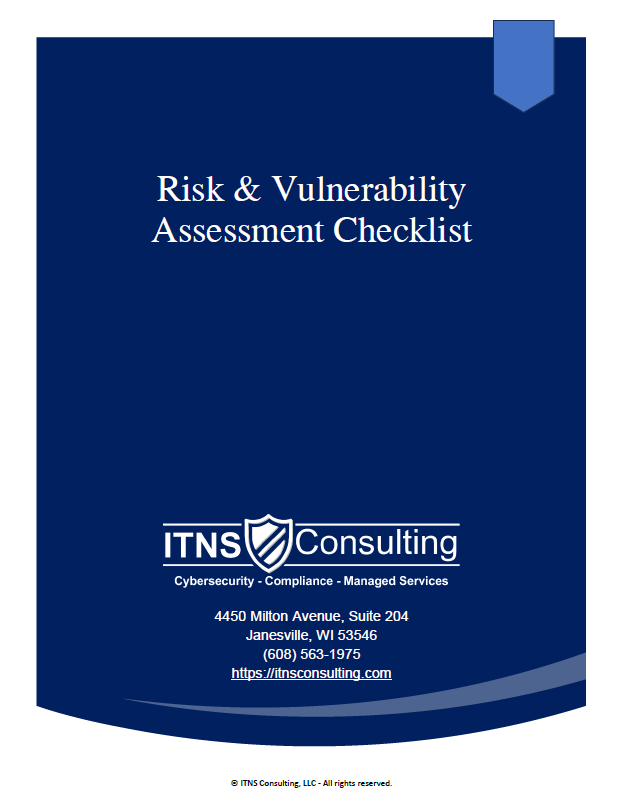
🔍 Risk & Vulnerability Assessment Checklist — Free Download
Identify Hidden Threats. Prioritize Fixes. Strengthen Your Security Posture.
This checklist helps you uncover the critical risks hiding across your environment, including high-impact vulnerabilities, misconfigured security tools, identity and access gaps, missing updates, and overprivileged accounts.
It also identifies vendor access concerns and weaknesses in backup, recovery, and evidence practices so you can prioritize improvements before they become costly problems.
Perfect for:
✔️ Organizations preparing for audits or cyber‑insurance renewal
✔️ Companies with legacy systems or unclear configurations
✔️ Leaders evaluating internal or outsourced IT
✔️ Teams wanting visibility into their real security posture