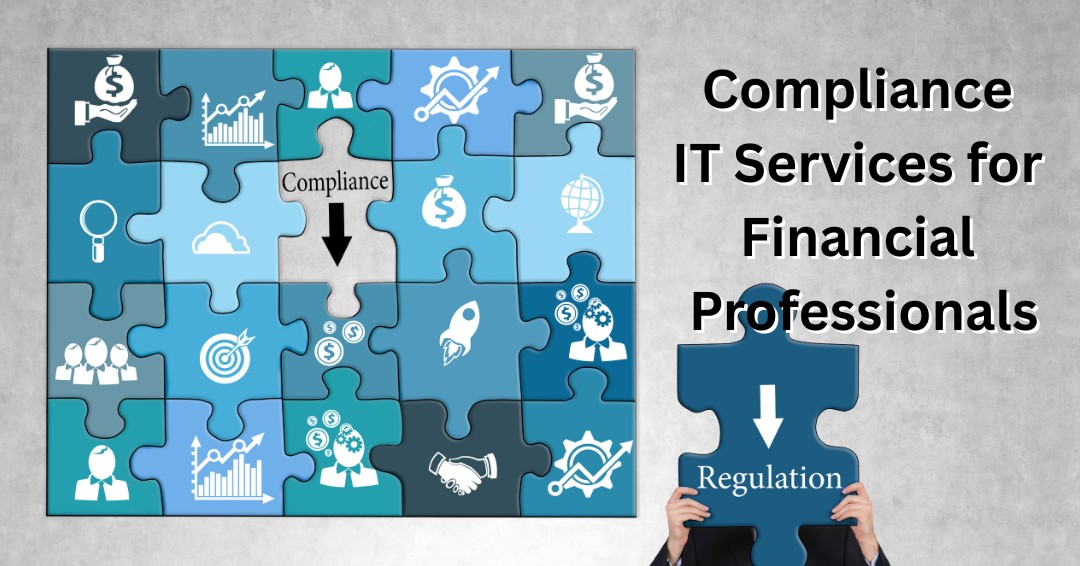


Compliance IT services help financial firms protect client data, strengthen cybersecurity, meet regulatory expectations, and prove controls work before anyone asks for evidence. For financial advisors, wealth management firms, tax professionals, RIAs, broker-dealers, and other financial services organizations, compliance-ready IT should support daily operations, client service, risk management, audit readiness, and growth.
If you work in financial services, you know the pressure. Clients trust your firm with account information, tax records, Social Security numbers, investment details, estate documents, business financials, and confidential conversations. Regulators expect reasonable safeguards, while cyber insurance carriers want evidence. Custodians and vendors ask about security controls. Your team also needs secure, reliable technology that works without creating unnecessary risk.
The challenge is that many financial firms still treat IT and compliance as separate conversations. Teams call IT when something breaks. Compliance teams respond when someone requests documentation. Leaders discuss cybersecurity after a scare. That reactive approach leaves gaps that can expose client data, interrupt operations, weaken audit readiness, and make risk management harder to prove.
Why Financial Firms Need Compliance IT Services Now
For years, a small financial firm could assume antivirus software, a firewall, and a local IT provider were enough. That is no longer true. Today, regulators, clients, cyber insurance carriers, and business partners expect financial firms to know where sensitive data lives, who can access it, how systems are protected, how vendors are reviewed, how incidents are handled, and how operations continue during disruption.
Regulatory expectations keep moving in the same direction: financial firms need written policies, incident response procedures, customer information safeguards, vendor oversight, access controls, risk assessments, staff training, and evidence that these controls are maintained. Regulators look for more than good intentions. They want firms to show how they protect sensitive information and respond when something goes wrong.
In plain language, your firm should be able to explain what it protects, how it protects it, who is responsible, what happens during an incident, and where that work is documented. That is why compliance readiness belongs in your IT strategy from the beginning.
Common IT Compliance Problems Financial Firms Face
Most financial professionals are not ignoring compliance. They are busy running a business. Advisors meet with clients, prepare reports, review portfolios, file documents, coordinate with custodians, manage tax deadlines, and respond to urgent client needs. Technology should support that work, not create another full-time job.
That is where gaps begin. Former employees may still have cloud access. Shared mailboxes may lack proper monitoring. Multi-factor authentication may protect email but not every critical application. Although backups may exist, no one may test them. Some vendors may have broad access to client data without a current security review. Policies may sit in a folder without reflecting daily operations. These everyday gaps can become regulatory findings, client confidence issues, or operational disruptions.
Many financial professionals describe the issue this way: “We know compliance matters, but we are not always sure whether our technology, cybersecurity controls, and documentation would hold up if a regulator, client, custodian, or insurance carrier asked for proof.” A compliance-focused IT strategy reduces that uncertainty.
Compliance IT Services Start With Risk Assessment
A strong compliance IT strategy starts with a practical cybersecurity risk assessment. For financial firms, that means identifying the systems, data, users, vendors, devices, and processes that support the business. It also means asking direct questions: Where does the firm store client information? Who can access it? How does the firm approve and remove access? Do devices use encryption? Are cloud settings secure? Do backups protect against ransomware? Can employees recognize phishing and social engineering? Does the firm document vendor risks?
ITNS Consulting helps firms answer those questions through structured risk assessments, vulnerability reviews, security reviews, and gap identification. Instead of delivering a vague technical report, we translate risk into business language: what matters, why it matters, what to fix first, and what documentation to maintain. This gives leadership a practical roadmap for compliance readiness and decision-making.
Access Control Is a Core Part of Compliance IT Services
In a financial firm, access creates risk. Every account, mailbox, application, laptop, mobile device, and vendor connection can become a pathway to sensitive client information. If the firm does not control, review, and document access, leadership may struggle to prove that information is protected.
A compliance-ready IT strategy should include multi-factor authentication, least privilege access, role-based permissions, secure password management, timely employee offboarding, and periodic access reviews. ITNS Consulting helps firms harden Microsoft 365, manage access, secure endpoints, and document control practices. The goal is to prevent one compromised password or overlooked account from becoming a firm-wide incident.
Cybersecurity Policies and Procedures Must Match Daily Operations
Many firms create policies for the compliance file instead of daily use. That creates risk. If written procedures say one thing and the firm does another, documentation can become a liability. Financial professionals need policies that are clear, realistic, and aligned with actual workflows.
ITNS Consulting helps firms develop and refine cybersecurity policies and procedures that support compliance without overwhelming the team. This may include acceptable use, access control, incident response, vendor management, backup and recovery, data handling, remote work, and security awareness procedures. Plain-language policies connected to actual systems are easier to follow and easier to defend.
Incident Response Planning Supports Compliance Readiness
When a financial firm experiences suspicious activity, ransomware, business email compromise, unauthorized access, or a vendor incident, the first few hours matter. Waiting to decide who to call, what to isolate, what evidence to preserve, and how to communicate creates unnecessary risk.
A compliance-ready IT strategy includes an incident response plan that the firm documents, explains, and reviews regularly. ITNS Consulting helps firms define response roles, escalation steps, communication procedures, evidence preservation expectations, recovery priorities, and post-incident review processes. This supports resilience, regulatory readiness, and timely response.
Vendor Risk Management Belongs in Your Compliance IT Strategy
Financial firms rely on many third parties: custodians, portfolio management platforms, CRM systems, document storage providers, tax software, payroll providers, compliance platforms, and outsourced IT services. Each relationship creates risk when vendors store, process, transmit, or access client information.
Compliance readiness requires consistent vendor oversight. Firms should know what data vendors handle, what security controls they maintain, how they report incidents, and when each relationship needs review. ITNS Consulting helps firms build practical vendor risk processes, organize documentation, and align third-party oversight with broader technology controls. This reduces blind spots and strengthens evidence for audits, insurance reviews, and client due diligence.
Backup, Disaster Recovery, and Business Continuity Protect Financial Operations
Financial professionals cannot afford prolonged downtime. If email, client files, planning software, tax records, or portfolio systems go offline, the impact is immediate. Clients still call. Deadlines still exist. Market activity continues. A firm cannot rely on untested backups.
ITNS Consulting helps firms evaluate backup and disaster recovery needs, monitor backup health, test recovery capabilities, and document business continuity procedures. This work supports resilience against ransomware, accidental deletion, hardware failure, cloud disruption, and natural disasters. The objective is not only to restore data, but to keep the firm operating under pressure.
Security Awareness Training Helps Financial Firms Reduce Cyber Risk
Criminals target financial professionals because client data and financial transactions have high value. Phishing emails, fake document requests, fraudulent wire instructions, spoofed vendor messages, and account takeover attempts are common threats. Employees need training tied to the situations they face every day.
ITNS Consulting supports security awareness training that helps employees recognize suspicious activity, report concerns quickly, and handle client information appropriately. Training should not become a once-a-year checkbox. Firms should reinforce it with practical examples, phishing awareness, and clear reporting procedures. When employees understand their role, they strengthen the control environment.
Documentation Turns Compliance IT Services Into Audit-Ready Evidence
One common mistake financial firms make is doing security work without documenting it. When the firm enables multi-factor authentication, record it. After the team completes access reviews, keep evidence. When staff test backups, document the outcome. Vendor reviews should also stay in the file. Employee training records should show completion and accountability.
Compliance IT services should help your firm create a system of record for completed security work and planned improvements. ITNS Consulting helps firms organize documentation, track remediation items, and maintain a more audit-ready posture. This gives owners, partners, compliance officers, and operations leaders better visibility into risk management.
Compliance Readiness Builds Client Trust in Financial Services
Clients may not ask about every technical control, but they care whether your firm protects their information. A firm that can explain its approach to cybersecurity, privacy, vendor oversight, incident response, and business continuity communicates professionalism. It shows that information protection is part of daily operations, not an afterthought.
For financial professionals, this also matters competitively. Prospective clients, referral partners, custodians, and business partners may view cybersecurity maturity as part of overall firm quality. When your firm builds compliance readiness into its IT strategy, leaders can respond with confidence instead of scrambling for answers.
How ITNS Consulting Delivers Compliance IT Services for Financial Firms
ITNS Consulting helps financial firms move from reactive technology support to a structured, governance-first IT program. Our process connects Managed IT, cybersecurity, compliance support, documentation, and strategic guidance so technology decisions support both operations and regulatory expectations.
That support can include risk assessments, vulnerability reviews, Microsoft 365 security hardening, endpoint protection, managed detection support, backup and disaster recovery planning, security awareness training, vendor risk assistance, policy and procedure development, vCIO and vCISO guidance, and audit-ready documentation. ITNS Consulting also translates technical priorities into practical business decisions that leadership can understand and act on.
The result is an IT strategy that does more than keep computers running. It helps protect client information, reduce operational risk, strengthen regulatory readiness, support cyber insurance conversations, and build confidence across the firm.
Build Compliance Into Your IT Strategy, Not Around It
The most successful financial services firms do not treat compliance as a standalone initiative that only becomes important when an audit, client questionnaire, or regulatory review occurs. Instead, they build compliance into the technology, processes, documentation, and controls that support everyday operations.
A compliance-ready IT strategy includes more than cybersecurity tools. It requires documented policies, vendor oversight, access controls, employee awareness, incident response planning, business continuity preparedness, and ongoing governance. When these elements work together, firms are better positioned to protect sensitive client information, reduce operational risk, and demonstrate accountability.
Financial organizations that proactively align technology with compliance objectives are often better equipped to adapt to changing requirements, strengthen client trust, and support long-term business growth.
Compliance readiness is not a destination. It is an ongoing commitment to managing risk responsibly and operating with confidence.
Is Your IT Strategy Truly Compliance-Ready?
Many financial firms have implemented security tools and technology controls but remain uncertain whether their policies, documentation, vendor management practices, and governance processes fully support today’s compliance expectations. If you’re unsure where gaps may exist, schedule a free consultation with ITNS Consulting. We’ll help evaluate your current environment, identify practical improvements, and develop a roadmap for stronger compliance, security, and operational resilience.
How Mature Is Your Compliance Program?
Building a compliance-ready IT strategy starts with understanding where your organization stands today.
Download our Compliance Program Maturity Scorecard to evaluate your firm’s current compliance efforts, identify opportunities for improve
📊 Compliance Program Maturity Scorecard — Free Download
Measure Your Governance. Identify Gaps. Build a Stronger, More Predictable Compliance Program.
This scorecard breaks governance and compliance into clear maturity stages, helping you understand where your program stands and identify gaps in documentation, evidence, and control ownership.
It also helps you prioritize improvements based on risk, build repeatable governance practices, and strengthen readiness for audits, insurance reviews, and client due diligence.
Perfect for:
✔️ Small and midsize businesses building or improving compliance programs
✔️ Organizations onboarding GRC tools
✔️ Leaders preparing for regulatory or client‑driven assessments
✔️ Teams wanting clarity, structure, and accountability
✔️ Businesses striving for NIST CSF, SOC2‑lite, or insurance‑aligned maturity