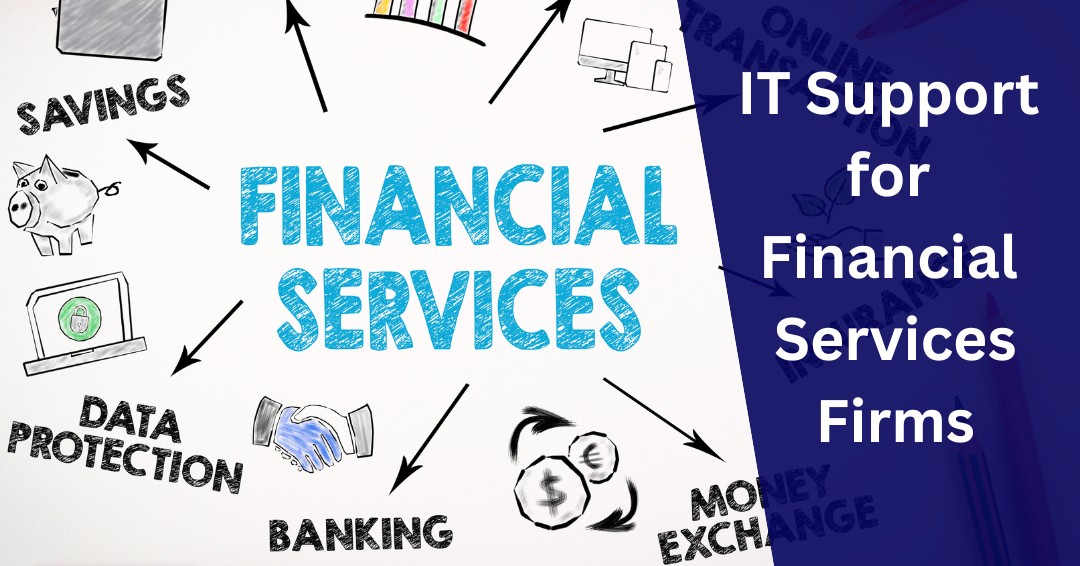


IT support for financial services firms is no longer limited to fixing computers, resetting passwords, or troubleshooting software issues. Financial planning, wealth management, tax, accounting, payroll, insurance, mortgage, and investment advisory firms all rely on technology to serve clients, protect sensitive financial and personal information, and maintain daily operations. At the same time, cybercriminals continue to target this data, while regulators, cyber insurance carriers, and clients increasingly expect firms to demonstrate that reasonable safeguards, documented controls, and reliable oversight are in place.
For many small and mid-sized financial services firms, the challenge is not understanding that cybersecurity and compliance matter. Instead, the challenge is managing technology risk, protecting client data, maintaining compliance, and keeping employees productive without building a large internal IT department. As a result, basic help desk support and reactive troubleshooting are no longer enough. Firms need a practical partner that combines Managed IT services, cybersecurity, compliance guidance, risk management, and business continuity planning.
The Problem with Traditional IT Support
Many firms still think of IT as the team that fixes computers, resets passwords, and solves software problems. However, responsive support is only one part of what financial services firms now need. Therefore, firms should take a more proactive approach.
A traditional break-fix provider may configure devices, troubleshoot connectivity, and resolve software issues. However, those services do not fully address ransomware, phishing, account compromise, vendor risk, compliance requirements, cybersecurity documentation, employee training, or disaster recovery planning. In addition, financial firms must understand their risks, implement safeguards, oversee third-party providers, prepare for incidents, and maintain evidence that security is being actively managed.
Ultimately, the question firm owners should ask is not, “Who fixes our computers?” Instead, the better question is, “Who helps us manage technology risk?”
Financial Services Firms Face Unique Cybersecurity Risks
Financial services organizations routinely handle highly sensitive information, including financial records, tax documents, account information, payroll data, Social Security numbers, and other confidential client information. Consequently, a security incident can result in business disruption, client trust issues, regulatory scrutiny, and significant recovery costs.
Common threats include:
- Phishing attacks targeting employees
- Business email compromise and wire fraud
- Ransomware
- Account takeover
- Vendor-related security incidents
- Data loss
- Insider threats
- Cloud misconfigurations
In many cases, these incidents originate from simple weaknesses such as poorly managed user accounts, inadequate employee training, weak password practices, or insufficient monitoring.
Compliance Requires More Than Security Software
Many financial services firms mistakenly assume that purchasing security software automatically satisfies compliance expectations. In reality, however, regulators, insurance providers, and clients increasingly want evidence that cybersecurity is being managed as a business process.
A mature cybersecurity program typically includes:
- Written information security policies
- Risk assessments
- Security awareness training
- Multi-factor authentication
- Access control procedures
- Incident response plans
- Vendor management processes
- Backup and recovery testing
- Ongoing documentation
Technology supports compliance, but it does not create compliance by itself. Therefore, documentation, governance, and accountability are equally important. In addition, financial services firms should be able to show that security controls are installed, supported by written policies, reinforced through repeatable procedures, and backed by compliance-ready evidence of due diligence.
Business Continuity Is a Business Requirement
Likewise, financial services firms depend on technology to serve clients and conduct daily operations. If key systems become unavailable because of ransomware, hardware failure, cloud service disruptions, or human error, then the business must continue operating.
A strong business continuity strategy ensures that the organization can:
- Access critical data
- Communicate with clients
- Restore systems quickly
- Continue serving customers during disruptions
- Recover from cyber incidents
Backups are important, but backups alone are not enough. Therefore, recovery procedures must be documented, tested, and aligned with business requirements. Otherwise, a recovery plan that has never been tested is simply an assumption.
Employees Are Part of the Security Program
Similarly, technology cannot fully protect a financial services organization without employee involvement. Staff members interact with clients, process transactions, handle sensitive information, and make decisions that affect security every day.
Effective security awareness training helps employees recognize:
- Phishing emails
- Social engineering attempts
- Suspicious links and attachments
- Fraudulent requests
- Password security risks
- Remote work threats
- Data handling requirements
Role-based training is especially important because different employees face different risks. For example, a payroll administrator, tax preparer, financial planner, insurance agent, and executive partner each interact with technology differently and should receive training that reflects those responsibilities.
Vendor Risk Cannot Be Ignored
Additionally, most financial services firms rely on multiple third-party providers to operate their business.
These may include:
- Cloud platforms
- CRM solutions
- Tax software
- Payroll applications
- Financial planning software
- Insurance platforms
- Document management systems
- Managed IT providers
Each vendor introduces potential risk. Therefore, organizations should understand what information vendors can access, how that information is protected, and what procedures exist if a vendor experiences a cybersecurity incident. As a result, consistent vendor review and oversight should be part of every firm’s security program.
What Financial Services Firms Really Need from an IT Partner
Ultimately, today’s financial services firms need more than technical support.
Instead, they need a technology partner that combines:
- Managed IT Services
- Cybersecurity management
- Compliance support
- Risk assessments
- Security training
- Business continuity planning
- Vendor risk guidance
- Strategic technology leadership
This governance-focused approach helps firms reduce risk while maintaining productivity, client trust, and operational efficiency. Instead of reacting to problems after they occur, organizations can identify issues earlier, document controls, improve their cybersecurity posture, and show that technology risk is being managed as part of the business. Ultimately, this approach gives firm leaders a clearer way to connect technology decisions with business outcomes.
How ITNS Consulting Helps Financial Services Firms
ITNS Consulting helps financial services firms move beyond reactive IT support by integrating Managed IT, cybersecurity, compliance support, and strategic guidance into a governance-first program. As a Managed Service Security Provider, we bring these areas together instead of treating them as separate concerns.
This gives small and mid-sized firms a practical operating model that helps them stabilize technology, harden defenses, protect sensitive data, support audit readiness, and maintain client trust.
Our services include:
- Managed IT Services
- Cybersecurity risk assessments
- Security policies and procedures
- Microsoft 365 security hardening
- Endpoint protection
- Backup and disaster recovery planning
- Security awareness training
- Vendor risk assistance
- vCIO and vCISO guidance
- Compliance-ready documentation
- Practical security governance for firms without a large internal IT department
Financial Services Firms Need More Than Basic IT Support
Cybersecurity, compliance, technology management, and operational resilience are no longer separate initiatives for financial services firms. They are interconnected business functions that directly influence client trust, regulatory readiness, and long-term growth.
While traditional IT support may resolve technical issues as they arise, modern financial services organizations require a more proactive approach. Cybersecurity oversight, compliance management, business continuity planning, vendor risk management, and strategic technology guidance have become essential components of a successful technology program.
Firms that adopt a governance-first mindset are often better positioned to meet regulatory expectations, protect sensitive client information, reduce operational risk, and maintain continuity during disruptions.
Technology should do more than keep systems running. It should support the firm’s ability to serve clients confidently, demonstrate accountability, and operate securely in an increasingly complex regulatory environment.
Is Your IT Strategy Supporting Compliance and Client Trust?
Many financial services firms have technology systems in place but remain uncertain whether their cybersecurity, compliance, and governance efforts are keeping pace with evolving industry expectations. If you’d like help evaluating your current environment, schedule a free consultation with ITNS Consulting. We’ll help identify practical improvements and develop a roadmap for a more secure, compliant, and resilient technology program.
Is Your Firm Meeting Today’s Cybersecurity and Compliance Expectations?
Financial services firms face increasing pressure to protect client information, manage risk, and demonstrate compliance with industry requirements.
Download our Financial Services Cybersecurity & Compliance Checklist to evaluate your firm’s current practices, identify potential gaps, and strengthen the safeguards that support client trust and regulatory readiness.
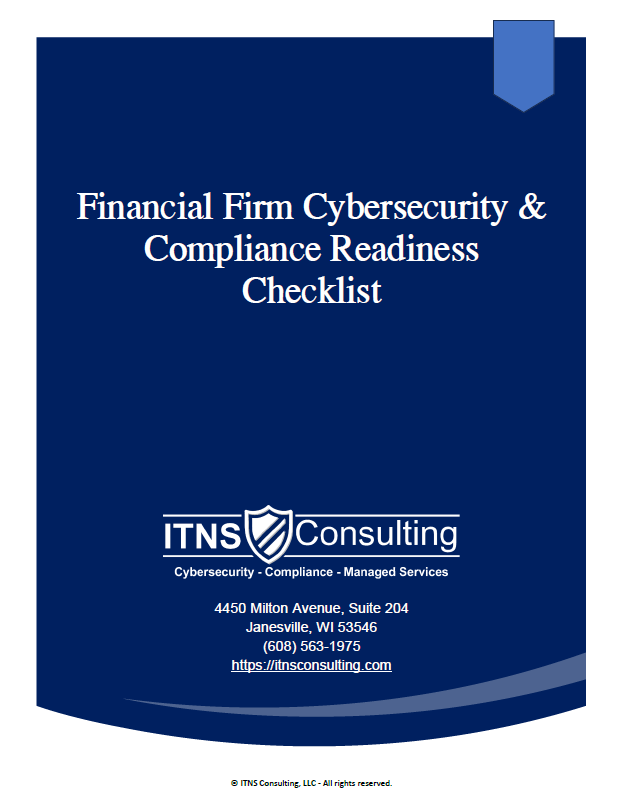
💼 Financial Firm Cybersecurity & Compliance Readiness Checklist — Free Download
Reduce Risk. Strengthen Controls. Demonstrate Due Diligence.
This checklist distills complex security and compliance expectations into an executive‑friendly, action‑oriented format with no deep technical background required.
Perfect for:
✔️ RIAs, wealth managers, and independent advisory firms
✔️ Broker‑dealers and hybrid practices
✔️ Accounting & tax firms handling sensitive financial data
✔️ Firms preparing for cyber insurance renewal, client due diligence, or internal audits
✔️ Leadership teams planning tech/security improvements this year