

Many small business owners once felt “their business is too small to target.” But artificial intelligence has changed the rules. AI is supercharging cybercriminals, removing the technical knowledge once required and allowing attackers to launch sophisticated scams with just a few simple prompts.
The result? Cyberattacks are now faster, more believable, and more difficult for understaffed teams to recognize. Small businesses, already pressed for time and resources, have become prime targets.
How AI Is Supercharging Cybercriminals and Transforming Modern Attacks
AI has turned cybercrime from a slow, manual operation into an automated system capable of generating large‑scale, highly customized attacks. Here’s how criminals use AI to increase accuracy, speed, and deception.
- AI Generates Extremely Convincing Phishing Messages
Gone are the days of easy‑to-spot typos and awkward grammar. AI tools like large language models create clean, professional emails that mimic real business communication.
Example:
Instead of a sloppy request for payment, AI can instantly produce a pixel‑perfect invoice that matches your real vendor’s formatting, tone, and branding.
- AI Mimics Employee Writing Styles
By analyzing public content LinkedIn posts, newsletters, company websites, old email leaks attackers can clone the writing style of leaders or employees.
Example:
If a CEO typically sends brief, urgent requests, AI can recreate that tone to ask accounting for a “quick wire transfer before 3 PM.”
- AI Rapidly Processes Stolen Data
When attackers gain access to email accounts, password dumps, or billing systems, AI can analyze large data sets in seconds to identify:
- high‑value customers
- likely password reset targets
- accounts with financial privileges
This leads to highly personalized attacks that feel legitimate.
- AI Adjusts Attacks in Real Time
Some AI systems can monitor how employees respond and automatically shift tone:
- Hesitant? The message becomes friendlier.
- Uncertain? It becomes more authoritative.
- Ignoring it? It becomes more urgent.
This type of adaptive phishing was almost impossible before AI.
Why Small Businesses Are Now Prime Targets
Small businesses often lack dedicated IT teams and advanced security tools, making them easier targets especially now that AI is supercharging cybercriminals.
- Overwhelmed Employees
In smaller teams, people juggle multiple roles.
Scenario:
Your office manager is handling payroll, scheduling, customer calls and a professional‑looking invoice arrives at the worst possible moment.
Why AI Makes It Worse:
The email is polished, familiar, and timed perfectly, increasing the chance that someone clicks before thinking.
- Limited or Outdated Security Tools
Many small businesses rely only on built‑in protections or basic antivirus software.
Scenario:
Your team uses default Windows protections without 24/7 monitoring.
Why AI Makes It Worse:
AI‑generated malware and phishing links are specifically designed to bypass traditional signature‑based defenses.
- Underestimating the Value of Their Own Data
Even micro-businesses hold valuable data: customer lists, payment info, and credentials.
Scenario:
A small home‑services company assumes they’re “too small” to attack.
Why AI Makes It Worse:
AI analyzes stolen data to identify which customers to target next, launching broader fraud campaigns.
- Being a Stepping Stone to Larger Organizations
Small businesses are often connected to bigger clients or vendors.
Scenario:
A bookkeeper’s email is compromised, and attackers use AI to impersonate them, requesting sensitive data from larger partners.
Why AI Makes It Worse:
AI can replicate email signatures, tone, and even voicemail style, making impersonation nearly impossible to detect.
Why Human Awareness Is Now Your Strongest Defense
Even the best cybersecurity tools cannot stop every AI‑driven attack. Today’s cybercriminals exploit human behavior, not just technical weaknesses.
AI‑enhanced attacks target:
- Routine actions: “This invoice looks normal.”
- Trust: “This sounds like my manager.”
- Urgency: “This needs to be handled immediately.”
- Distraction: “I’ll click this real quick.”
For small, busy teams, these tactics are especially effective. This makes employee awareness not expensive tools the most critical layer of defense.
How Small Businesses Can Protect Themselves in an AI‑Driven Threat Era
You don’t need an enterprise‑level budget. You need clear, repeatable processes that help employees slow down and think before reacting.
- Create Simple, High‑Impact Security Policies
Focus on essential rules:
- Always verify payment changes via a phone call.
- Never click links in unexpected emails. Confirm first.
- Approve password reset requests only through known secure channels.
- Do not open attachments unless the sender and purpose are clear.
Even a one‑page policy significantly reduces risk.
- Train Your Team Regularly (Short and Frequent)
Quarterly 10–15 minute sessions work best.
Include topics such as:
- AI‑generated phishing examples
- Deepfake voicemail or phone scams
- How urgency is used to manipulate
- How to report suspicious emails
- Use Multifactor Authentication Everywhere
MFA is one of the most effective security measures available.
Even if attackers steal a password, they still cannot log in without the second authentication step.
- Encourage a No‑Blame Reporting Culture
Employees must feel safe reporting:
- suspicious messages
- mistaken clicks
- odd system behavior
Delays allow attackers more time to cause damage.
Reward caution not speed.
- Build a Simple Incident Response Plan
A short checklist is enough:
- Who to call within the company
- How to isolate infected devices
- How to reset passwords
- Which systems to check first
- Which clients, vendors, or partners need to be notified
Preparedness prevents panic and speeds recovery.
AI Has Changed the Threat Landscape. Preparation Must Change Too.
Artificial intelligence is giving cyber criminals new ways to scale attacks, personalize scams, and exploit human trust with unprecedented efficiency. What once required significant effort can now be automated, refined, and deployed at a scale that challenges organizations of every size.
For small businesses, the good news is that effective cybersecurity is not determined by the size of your budget. It is determined by the strength of your processes, the awareness of your employees, and your willingness to prepare before an incident occurs.
Strong authentication, employee awareness training, clear policies, routine verification procedures, and a security-focused culture remain some of the most effective defenses against AI-powered threats. Organizations that invest in these fundamentals are far better positioned to identify attacks early and reduce their impact.
AI may be changing how cyber criminals operate, but preparation, vigilance, and informed decision-making remain the keys to staying protected.
Is Your Business Prepared for AI-Powered Cyber Threats?
Cybercriminals are using artificial intelligence to make phishing attacks, impersonation scams, and social engineering attempts more convincing than ever. If you’re unsure whether your business has the safeguards needed to defend against these evolving threats, schedule a free consultation with ITNS Consulting. We’ll help you identify potential vulnerabilities and develop practical strategies to strengthen your cybersecurity posture.
Strengthen Your Cybersecurity Foundation
The most effective defense against modern cyber threats starts with getting the fundamentals right. Download our Cybersecurity Baseline Checklist to evaluate essential security controls, identify common weaknesses, and take practical steps to better protect your business from today’s evolving threat landscape.
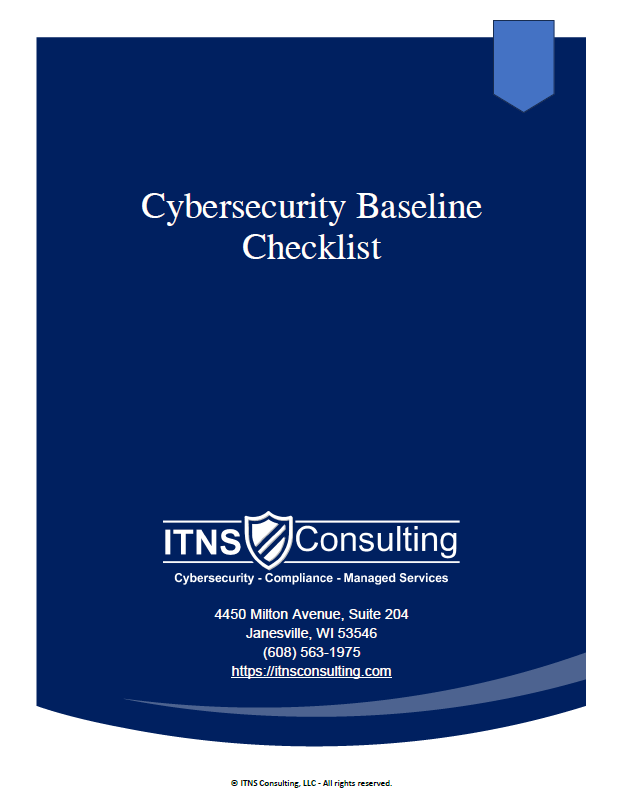
🛡️ Cybersecurity Baseline Checklist — Free Download
Understand Your Current Security Posture. Identify Gaps. Strengthen Your Defenses.
This straightforward, business-friendly checklist helps you evaluate your current security posture in minutes and identify weak points before attackers can exploit them.
It also helps you prioritize the most impactful fixes while strengthening compliance, cyber insurance readiness, and operational resilience.
Perfect for:
✔️ Small businesses getting started with cybersecurity
✔️ Leaders evaluating internal or outsourced IT performance
✔️ Teams preparing for growth, compliance, or insurance renewal
✔️ Organizations wanting predictable, repeatable security practices