While you would not expect a technology company to discuss topics such as trust, we’re not like most IT providers. We understand how technology affects trust and impacts your people, processes and bottom line. That’s why we’re here to show you how to prioritize trust to achieve your organizational goals.
When we talk about trust in the technology industry, we usually mean zero trust. While that’s an equally important topic, it isn’t the topic of discussion here. In this blog post, we’ll concentrate on how technology and processes can help your business build trust with employees and customers.
According to Forrester Research, trust is confidence in the high probability that a person or organization will spark a specific positive outcome in a relationship.
Roadmap To Trust-Building
Since trust has a significant impact on the future course of your business, take extra care while nurturing it and ensure you prioritize trust building with customers, employees, as well as vendors. Consider the following six actions when striving to improve organizational trust with employees, customers and other stakeholders.
1. Place Extra Emphasis On Trust Building
Without a strong level of trust that supports collaboration and innovation, no firm can achieve long-term success. The most effective leaders foster an environment where employees feel free to discuss the latest, groundbreaking topics.
2. Understand The Concept Of Trust From Both Inside And Outside The Company
Trust can only be fostered inside the organization if the leadership is competent and has the employees’ best interests at heart. Employees must feel as if they are part of a team working toward a common goal. Transparency can earn trust from the perspective of an outsider. This entails being honest, open and accountable.
3. Determine Stakeholders To Build Trust With
Your target stakeholders should be the ones who care about your product or service. They might be customers, clients, employees or partners.
Once you’ve identified your target stakeholders, it’s crucial to understand what they want from you. Then, it’s time to reach out to them with the intention of trust-building in a way that resonates with them.
4. Express Trust Quantitatively
To begin quantifying trust, start by answering the following questions: What are the criteria and elements that go into deciding whether or not to trust someone? In a given scenario or relationship, how much trust is there? What factors contribute to increased or decreased trust?
5. Proactively Invest In Building, Mending And Improving Trust
Investments made to strengthen trust must be seen as an investment for the future. This is because the benefits of safeguarding and nurturing trust extend beyond the company’s internal operations to its relationships with customers and other external partners.
6. Realize That Trust Management Is Not A One-Time Exercise
The digital world has introduced a new challenge for businesses of all sizes: trust management. For leaders, this means an ongoing effort to assess and rebuild trust, sometimes from the ground up. This may seem like a daunting task, but it is inevitable and something that businesses must proactively undertake.
Trust Should Be a Business Strategy, Not an Afterthought
Trust influences every aspect of a business. It affects customer loyalty, employee engagement, vendor relationships, referrals, and long-term growth. While many organizations focus on products, services, and pricing, the businesses that consistently earn trust often create stronger relationships and greater resilience over time.
Building trust requires more than good intentions. It requires accountability, consistency, transparency, strong security practices, and a commitment to doing what is right even when no one is watching. Customers want confidence that their information is protected, their expectations will be met, and the businesses they work with operate responsibly.
Organizations that prioritize trust are often better positioned to strengthen their reputation, differentiate themselves from competitors, and create lasting customer relationships. Trust is not something that happens automatically. It is built through the systems, processes, and actions that demonstrate reliability every day.
The businesses that make trust a priority today are often the ones that thrive tomorrow.
Is Your Business Building Trust Through Security, Compliance, and Accountability?
Many organizations understand the importance of trust but never evaluate whether their policies, security practices, compliance efforts, and operational processes consistently support it. If you’d like help identifying opportunities to strengthen customer confidence and reduce risk, schedule a free consultation with ITNS Consulting.
We’ll help you evaluate your current environment, identify practical improvements, and develop a strategy that strengthens security, governance, and trust across your organization.
How Mature Is Your Compliance and Trust-Building Program?
Trust is often built on the strength of your organization’s governance, accountability, security, and compliance practices.
Download our Compliance Program Maturity Scorecard to evaluate your current efforts, identify opportunities for improvement, and gain a clearer understanding of your overall governance, risk management, and compliance maturity.
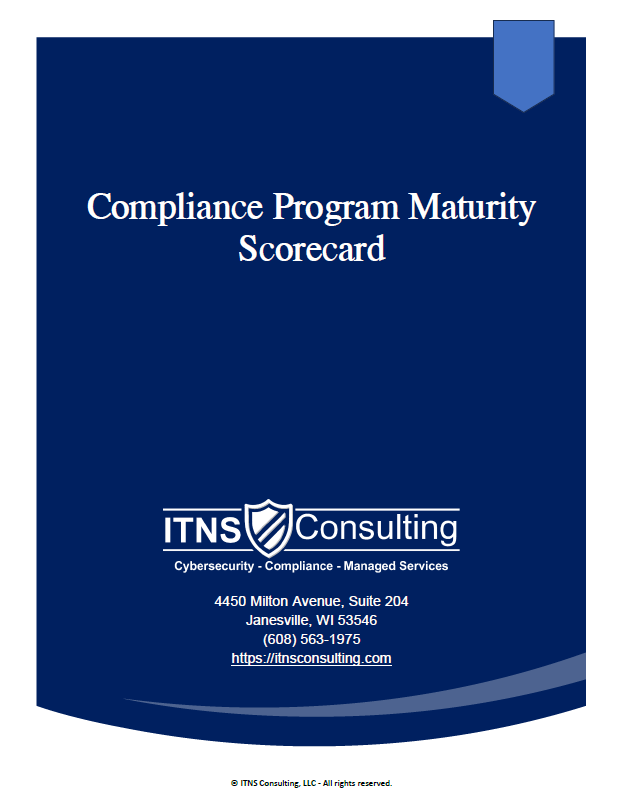
📊 Compliance Program Maturity Scorecard — Free Download
Measure Your Governance. Identify Gaps. Build a Stronger, More Predictable Compliance Program.
This scorecard breaks governance and compliance into clear maturity stages, helping you understand where your program stands and identify gaps in documentation, evidence, and control ownership.
It also helps you prioritize improvements based on risk, build repeatable governance practices, and strengthen readiness for audits, insurance reviews, and client due diligence.
Perfect for:
✔️ Small and midsize businesses building or improving compliance programs
✔️ Organizations onboarding GRC tools
✔️ Leaders preparing for regulatory or client‑driven assessments
✔️ Teams wanting clarity, structure, and accountability
✔️ Businesses striving for NIST CSF, SOC2‑lite, or insurance‑aligned maturity