Rushing through process implementations, technology upgrades and new hire training can cause botched executions and unnecessary confusion. That’s why businesses must pursue a sustainable strategy that allows them to grow smarter, not just faster for scalability. Sustainability in business is all about being repeatable, adaptable and capable of scaling up and down as needed.
Sustainable scaling requires you to consider your people, processes and technologies. Having the right technology on your side can help you scale your business up or down with ease as well as empower people and processes. But what technology should you consider introducing to your infrastructure to encourage flexible scaling? Keep reading to find out.
Technologies to Impact Scalability
Consider these technologies if you wish to take the path of scalability:
Learning Management – Deploy a learning management system that incorporates anti-phishing training and allows you to customize your learning modules. Look for a solution with additional features such as:
- Multiple languages (ideal for global teams)
- Structured learning
- Engagement documentation (helpful when you’re required to prove every learner’s training completion)
- Automated reminders
- Centralization of information (to ensure that critical training is not lost if crucial team members move on to other organizations)
IT Documentation – Poor documentation can lead to unanticipated downtime, operational and performance issues, and ultimately, revenue loss. It also results in countless hours of employee time wasted searching for information or guidance to solve simple IT problems.
IT processes must be optimized for performance, reliability and effectiveness to meet business expectations and security requirements. To achieve this goal, thorough and transparent documentation is required to ensure and maintain proper configurations and processes.
Make sure the solution has the following features:
- Organized documentation
- Relationship mapping (link related items so that you have access to all the information you require)
- Safe password management
- Enterprise-level security
- Capability to integrate with existing technologies at your business
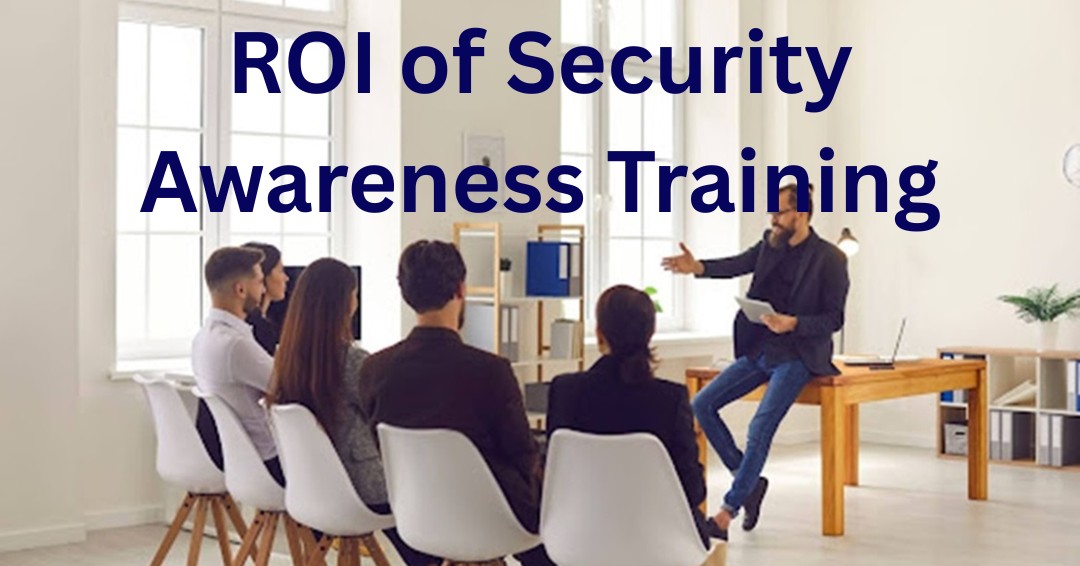
Security Awareness Training – A one-time training program will not help your employees defend themselves against cyber threats, nor will it help your company grow sustainably. Your employees require thorough and ongoing security awareness training to deal with the rapid changes happening around them.
Remember that the return on investment (ROI) on security awareness training manifests in better decision-making and employees who respond quickly to cyber threats, saving your company from data breaches, reputational damage and potentially costly lawsuits.
Through self-paced, short learning modules, every employee must be made aware that even minor errors can snowball into a disastrous security disaster for the company.
Ongoing Vulnerability Scanning – Overlooking even one vulnerability could escalate into something severe. What’s more concerning is that, according to the IBM Cost of Data Breach report, it takes an average of 287 days to detect and contain a data breach.
Continuous vulnerability scanning can assist you in detecting and remediating vulnerabilities while freeing up your team’s time to focus on other tasks.
Vulnerability scanning that focuses on point-in-time reporting can only help your business up to a point since it can’t detect evolving vulnerabilities. Instead, try continuous vulnerability scanning that is capable of detecting network vulnerabilities as soon as they appear.
Scalable Growth Requires More Than the Right Technology
Technology can play a critical role in helping organizations grow, improve efficiency, and adapt to changing business demands. However, the value of any technology investment depends on how well it aligns with business objectives, operational requirements, and future growth plans.
The most successful organizations do not simply adopt new technology because it is available. They evaluate how technology can improve processes, remove bottlenecks, support employees, strengthen security, and create a foundation for sustainable growth. When technology decisions are guided by a clear strategy, businesses are often better positioned to scale efficiently and avoid costly disruptions.
Scalability is not achieved through a single solution. It is built through a combination of thoughtful planning, operational discipline, and technology investments that support long-term success.
Organizations that prepare for growth today are often the ones best positioned to capitalize on opportunities tomorrow.
Is Your Technology Environment Ready to Scale?
Many organizations invest in technology without a clear understanding of how those investments will support future growth. If you’d like help evaluating your current environment and identifying which technologies should be prioritized, schedule a free consultation with ITNS Consulting.
We’ll help assess your technology landscape, identify potential bottlenecks, and develop a practical roadmap that supports scalability, operational efficiency, and long-term business success.
Build a Technology Plan That Supports Growth
Successful growth requires more than implementing new technology. It requires a clear strategy.
Download our Technology Roadmap Planner to evaluate your current technology environment, identify future priorities, and create a practical roadmap that supports scalability, operational efficiency, innovation, and long-term business success.
🧭 Technology Roadmap Planner — Free Download
Create a Clear, Strategic, and Measurable IT Improvement Plan
This structured planning tool helps you map IT, cybersecurity, and compliance priorities, identify outdated or high-risk systems, and document operational challenges and improvement opportunities.
It also helps you build a clear 12- or 24-month roadmap that aligns technology investments with budget cycles and communicates priorities clearly to leadership, staff, and vendors.
Perfect for:
✔️ Small business owners and general managers
✔️ Office managers and operations leads
✔️ Teams evaluating IT providers or internal processes
✔️ Organizations preparing for growth, compliance, or cyber insurance
✔️ Any business wanting more predictable, strategic IT planning