When it comes to running your small business, navigating the ever-changing market landscape can be a real challenge. In order to stay ahead of your competitors and seize emerging opportunities, you need a strategic tool that can help you adapt, anticipate, and capitalize on market conditions. That is the role of risk management.
At ITNS Consulting, we understand the unique challenges that small businesses face in today’s volatile and competitive market. That’s why we believe that risk management is not just a necessary practice, but a game-changing opportunity for your business.
Let’s dive deeper into the role of risk management for small businesses and explore how it can benefit you:
Adapt to Changing Market Conditions
In today’s fast-paced business environment, staying adaptable is crucial for survival. With effective risk management strategies, you can identify potential threats and adjust your business operations accordingly.
Whether it’s shifting consumer preferences, economic fluctuations, or technological advancements, risk management helps you proactively respond to changes and make informed decisions to keep your business thriving.
Anticipate Competitive Threats
Competition is inevitable in any industry, and staying one step ahead is essential. Risk management allows you to identify and assess potential competitive threats, such as new entrants, changing customer demands, or disruptive technologies.
By understanding these risks, you can develop strategies to mitigate their impact and maintain your competitive edge.
Capitalize on Emerging Opportunities
Every market presents new opportunities for growth and innovation. Risk management helps you identify and evaluate potential opportunities, enabling you to make calculated decisions on where to invest your resources.
By effectively managing risks associated with new ventures, partnerships, or product launches, you can maximize your chances of success and unlock the full potential of your small business.
Risk Management Creates Opportunities for Growth
Every business faces risk, but successful organizations do not simply react to challenges as they arise. They proactively identify potential threats, evaluate their impact, and implement strategies that reduce uncertainty while supporting long-term business objectives.
Effective risk management is about more than avoiding problems. It helps organizations make better decisions, improve resilience, protect valuable assets, and create a stronger foundation for sustainable growth. Whether the risks involve cybersecurity, operations, compliance, vendors, or business continuity, understanding them is the first step toward managing them effectively.
The organizations that thrive are often those that view risk management as a strategic advantage rather than a compliance exercise. By proactively addressing vulnerabilities today, businesses can better position themselves to seize opportunities tomorrow.
Do You Know Where Your Greatest Risks Exist?
Many businesses understand that risks exist but struggle to identify which vulnerabilities deserve immediate attention. If you’re unsure where your organization may be exposed, schedule a free consultation with ITNS Consulting. We’ll help you evaluate potential risks, prioritize improvements, and develop a practical roadmap for strengthening security, resilience, and operational stability.
Identify Risks Before They Become Problems
The first step in effective risk management is understanding where vulnerabilities exist. Download our Risk & Vulnerability Assessment Checklist to evaluate your organization’s current security posture, identify potential weaknesses, and take proactive steps to reduce risk before it affects your business.
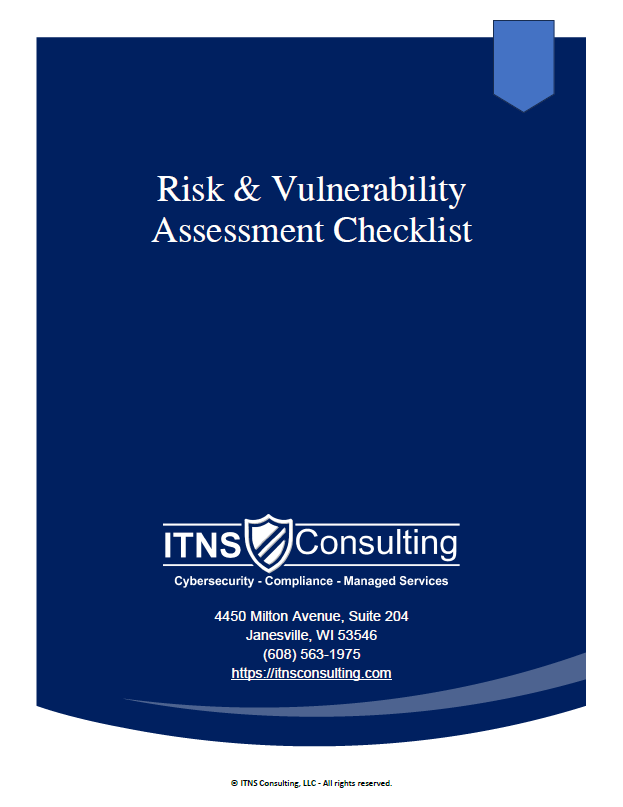
🔍 Risk & Vulnerability Assessment Checklist — Free Download
Identify Hidden Threats. Prioritize Fixes. Strengthen Your Security Posture.
This checklist helps you uncover the critical risks hiding across your environment, including high-impact vulnerabilities, misconfigured security tools, identity and access gaps, missing updates, and overprivileged accounts.
It also identifies vendor access concerns and weaknesses in backup, recovery, and evidence practices so you can prioritize improvements before they become costly problems.
Perfect for:
✔️ Organizations preparing for audits or cyber‑insurance renewal
✔️ Companies with legacy systems or unclear configurations
✔️ Leaders evaluating internal or outsourced IT
✔️ Teams wanting visibility into their real security posture