

Cybersecurity isn’t just about ticking boxes on a technical checklist; it’s a vital strategy to protect PHI (Protected Health Information), along with your business’s sensitive data, your customers, and your reputation.
For small businesses, especially those handling sensitive personal or healthcare information, safeguarding data has never been more critical. While the Health Insurance Portability and Accountability Act (HIPAA) directly applies to healthcare, its principles offer valuable insights for any business managing confidential information.
In this article, we explore HIPAA-inspired best practices to help small business owners strengthen their defenses against cyber threats and protect sensitive data effectively.
What is HIPAA and Why Does It Matter?
HIPAA sets rules for healthcare providers, insurance companies, and vendors (like billing services or IT providers) to protect PHI from unauthorized access.
While HIPAA applies primarily to healthcare, its principles—security, privacy, and accountability—are valuable to anyone handling personal or sensitive information. Think of HIPAA compliance as a framework for managing any type of confidential data, whether it’s medical records, financial information, or employee data.
Although HIPAA is a U.S. regulation, similar laws exist around the globe to ensure the protection of personal data, reinforcing the idea that PHI protection matters everywhere.
Principles to Protect PHI, Sensitive, and Common Data
Even if you don’t work in healthcare or in the U.S., HIPAA compliance principles offer valuable lessons for protecting PHI and sensitive data.
The Principle of Least Privilege
- HIPAA Rule: This principle limits access to just the PHI necessary for the job at hand. Nothing more, nothing less.
- General Application: In any business, access to sensitive information should be restricted to those who need it. By granting access only to those who require it, you minimize the risk of accidental data leaks or misuse—whether it’s financial records, customer details, or intellectual property.
Data Encryption Protects Information from Unauthorized Access
- HIPAA Rule: Healthcare personnel must store and transmit data through encrypted channels.
- General Application: Encryption safeguards data as it moves across networks, which is vital for any business sharing or storing sensitive information online, from customer addresses to payroll records. Encrypting data reduces the risk of interception and misuse.
Educating Employees on Data Protection
- HIPAA Rule: Healthcare organizations must train employees on protecting PHI.
- General Application: Any business should train its staff on data security best practices. Teaching employees how to recognize phishing attempts, avoid suspicious behavior, and securely handle information helps reduce the risk of data breaches.
Identifying Weaknesses with Regular Audits and Risk Assessments
- HIPAA Rule: Healthcare providers must regularly assess risks and address vulnerabilities in their systems.
- General Application: Regular audits are essential for businesses across all industries, not just healthcare. Conducting risk assessments helps identify potential security gaps and address them before they lead to data breaches or system failures.
Incident Response Plans: Be Prepared for Emergencies
- HIPAA Rule: HIPAA requires healthcare organizations to have a company-wide incident response plan for data breaches.
- General Application: Whether it’s a natural disaster, cyberattack, or system failure, businesses should have a clear response plan in place. An incident response plan outlines the steps to take in the event of a data breach and designates individuals responsible for carrying out those steps.
Documenting Policies and Procedures for Recordkeeping
- HIPAA Rule: HIPAA requires healthcare providers to document their compliance activities and keep records of their efforts.
- General Application: Documenting processes and policies helps ensure that all employees understand their responsibilities. It makes it easier to demonstrate compliance and review security practices.
Protecting Your Sensitive Digital Assets
The cost of a data breach can be devastating—financial losses, reputational damage, and legal consequences can cripple any organization. That is why it is essential to protect PHI and other sensitive data.
Here are some key practices you can implement to protect PHI:
- Follow the Principle of Least Privilege: Limit access to sensitive data to only those who need it.
- Use Encryption: Safeguard data, especially when transmitting it over the internet, to prevent unauthorized access.
- Educate Employees: Ensure your team understands data security practices and how to identify potential threats.
- Conduct Regular Audits: Identify vulnerabilities and address risks proactively.
- Have an Incident Response Plan: Know what actions to take in case of a data breach.
- Document Policies and Procedures: Keep thorough records of your data management practices.
Protecting sensitive data isn’t just about legal compliance; it’s about respecting the privacy of those whose information you handle. Whether you’re dealing with medical records or business data, HIPAA’s principles of security and accountability provide a solid foundation for stronger data protection practices.
Protecting PHI Requires Ongoing Commitment
Protecting Protected Health Information is about more than meeting regulatory requirements. It is about preserving trust, safeguarding sensitive information, and demonstrating a commitment to the people whose data has been entrusted to your organization.
Cybersecurity is no longer a concern limited to large healthcare systems or major enterprises. Organizations of every size face growing threats that can expose sensitive information, disrupt operations, and damage reputations. The good news is that many risks can be reduced through strong security controls, employee awareness, documented processes, and a proactive approach to compliance.
The organizations that protect PHI most effectively understand that security is not a one-time project. It is an ongoing commitment to risk management, accountability, and continuous improvement.
By taking practical steps today, you can strengthen security, support compliance efforts, and better protect the patients, customers, and stakeholders who rely on your organization.
Is Your Organization Doing Enough to Protect PHI?
Many organizations believe they have adequate safeguards in place until a compliance review, security incident, or audit reveals unexpected gaps. If you’re unsure whether your current cybersecurity and compliance practices adequately protect sensitive health information, schedule a free consultation with ITNS Consulting. We’ll help you identify potential risks, evaluate existing controls, and develop a practical roadmap for stronger data protection and compliance readiness.
How Prepared Is Your Organization to Protect PHI?
Protecting sensitive healthcare information requires more than technology alone. It requires documented controls, employee awareness, security processes, and ongoing compliance efforts.
Download our Healthcare Cybersecurity & Compliance Readiness Checklist to evaluate your current safeguards, identify potential gaps, and strengthen your organization’s ability to protect PHI and support compliance objectives.
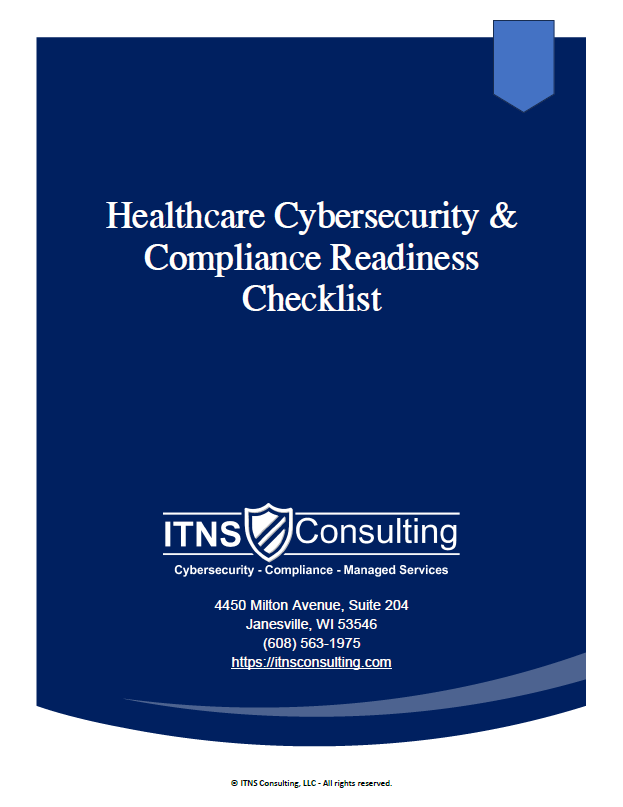
🏥 Healthcare Cybersecurity & Compliance Readiness Checklist — Free Download
Protect PHI. Reduce Breach Risk. Be Audit Ready.
This checklist breaks down complex cybersecurity and compliance expectations into clear, actionable steps. It covers what to check, what to fix, and what to document so your next audit, assessment, or insurance renewal is easier and faster.
Perfect for:
✔️ Private practices, clinics, and ambulatory care facilities
✔️ Dental, chiropractic, specialty, and allied‑health providers
✔️ Telehealth, billing/RCM, and third‑party service partners
✔️ Leadership teams planning security or compliance improvements