As a business owner, it’s crucial to prioritize the security of your supply chain and choose vendors that are committed to implementing best-in-class defense measures. This is because supply chain attacks can exploit weaknesses within your supply chain to infiltrate systems and cause harm to your business and reputation.
You must always strive to select vendors having a track record of being consistent with their security efforts. While no system is 100% secure, some vendors demonstrate a superior commitment to excellence in security matters compared to others.
The vetting process must be a non-negotiable when selecting vendors because it helps you identify potential security risks and ensure you collaborate with a vendor committed to protecting your business and your customers. By thoroughly vetting potential vendors, you can avoid partnering with vendors that fail to meet your security needs and expectations.
Primary Considerations for the Supply Chain Vetting Process
There are several key considerations to keep in mind when vetting potential vendors:
Security Measures
You need to understand your vendors’ security measures before partnering with them. For that, you should have a conversation with them about their security protocols and procedures.
To keep your business safe, you should determine whether the vendor performs regular vulnerability scans, timely system updates and multi-factor authentication. This will help you determine whether the vendor can meet all your security expectations and needs.
Security Certifications
Your vendor should be able to show certifications demonstrating compliance with industry security standards. This is significant because these certifications prove that the vendor has been independently assessed and meets security standards.
Data Storage
How and where does a vendor store your data? You must understand the storage details of your sensitive data, whether it’s stored in the cloud, on-premises, or in another manner.
This is critical because it will help determine whether the vendor will manage your data carefully and safeguard it against potential breaches.
Data Management
You must understand what will happen to your data if the partnership ends. Will it be deleted, stored for a while or transferred to another vendor?
Understanding whether third parties will have access to your data is critical. Just as you may outsource some tasks to a third-party vendor, they may outsource some tasks to a fourth-party vendor. It’s crucial to understand what they’ll be sharing.
Business Continuity and Disaster Recovery (BCDR)
You have the right to know if your vendor has a Business Continuity and Disaster Recovery (BCDR) plan. In the event of a disaster or a crisis, this will ensure that your critical data and systems will be available and recoverable. This will also ensure that your business operations continue smoothly, even during a crisis.
Cyber Liability Insurance
With increasing cyberattacks and data breaches, you need to know if your vendor has cyber liability insurance. This insurance coverage will protect your business in the event of a worst-case scenario and will help ensure that your vendor can compensate you for any damages caused.
Strong Vendor Selection Is the Foundation of Supply Chain Security
Every vendor relationship introduces both opportunities and risks. The right partners can help your business grow, improve efficiency, and support innovation. The wrong partners can introduce security vulnerabilities, compliance concerns, and operational disruptions that affect your entire organization.
Effective vendor selection requires more than comparing pricing and service offerings. Organizations should evaluate security practices, access requirements, compliance commitments, data protection measures, and the vendor’s ability to support long-term business objectives.
The most successful organizations take a proactive approach to third-party risk management by establishing clear expectations, reviewing vendor access regularly, and ensuring that suppliers meet appropriate security standards before sensitive information is shared.
Supply chain security begins long before a contract is signed. It starts with selecting the right partners and maintaining visibility into the risks they may introduce.
Are Your Vendors Meeting Your Security Expectations?
Many businesses evaluate vendors based on cost and functionality while overlooking important cybersecurity and compliance considerations. If you’re unsure whether your vendor selection process adequately addresses third-party risk, schedule a free consultation with ITNS Consulting. We’ll help you evaluate vendor relationships, identify potential exposures, and develop a practical strategy for strengthening supply chain security.
How Much Access Do Your Vendors Really Need?
Third-party vendors often require access to systems, applications, and sensitive information to support business operations. Without proper oversight, that access can introduce unnecessary risk.
Download our Vendor Access Review Template to evaluate vendor permissions, identify excessive access, and strengthen your organization’s approach to third-party risk management.
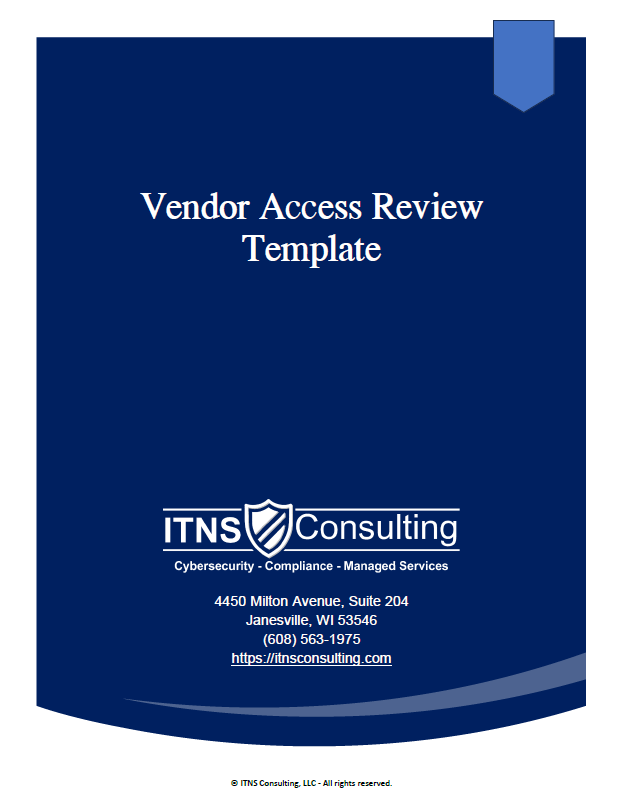
🔐 Vendor Access Review Template — Free Download
Know Who Has Access. Reduce Third Party Risk. Strengthen Your Security.
This template provides a clear, organized way to document every vendor with system or data access, identify excessive permissions, evaluate risk levels, and define security and support responsibilities.
It also helps you track critical safeguards, review offboarding procedures, and record changes and follow-up actions so vendor access remains secure and accountable.
Perfect for:
✔️ Small and mid-size businesses
✔️ Companies preparing for cyber insurance renewal
✔️ Teams undergoing vendor due‑diligence from clients or partners
✔️ Organizations evaluating current IT or SaaS usage
✔️ Leaders wanting strong governance and predictable security