Remote or hybrid work models are utilized by many businesses to keep their operations up and running. For all its benefits, working remotely does present unique challenges as it exposes organizations to a whole new level of cybersecurity and compliance threats. With cyber criminals preying on vulnerable home networks and work-from-home employees saving files on local drives, businesses using a remote work model face a significant threat to proprietary data.
If you are a small business, you should never regard cybersecurity as an afterthought.
In this blog, we’ll look at the major compliance and security concerns associated with working remotely and how to overcome them. Despite the exponential growth of cyber threats, businesses can successfully resist these threats and maintain regulatory compliance by utilizing cutting-edge technological solutions, even if your entire workforce is remote.
Challenges To Security And Compliance With Remote Work
Although many companies utilize a remote or hybrid work model, only a few have solid policies or processes in place that support secure working remotely. Even some of the largest companies struggle to adhere to compliance standards while their employees work from home.
Businesses of all sizes face the following challenges when working remotely:
- Reduced Security: Today, your employees take their business devices home and use them on their home networks. They also occasionally use their personal devices for office work. This poses a great threat to business data since organizations have very little control over security.
- Inability To Enforce Best Practices: When operating within your office environment, you can ensure data security best practices are followed by employees. However, with remote work, employees might use shared networks or public Wi-Fi connections to perform their work, adding to security complications.
- Inadequate Backup: Data backup failure is quite common. That’s why organizations need to make sure they have multiple copies of their critical data in case their remote servers are compromised.
- Lack Of Employee Awareness: Although most organizations follow best practices with regards to employee and customer data, human error is still a major threat to security and compliance. Remote employees need to be provided with proper awareness training on how to handle data and on the best practices to follow.
Best Ways To Ensure Compliance While Working Remotely
Although remote setups make compliance more challenging than usual, organizations can incorporate the following best practices to boost their security and stay compliant with various regulations.
1. Create A Cybersecurity Policy
If you don’t have a cybersecurity policy in place already, the time to create one is now. It’s vital that organizations create a cybersecurity policy suitable for working remotely as well. This policy should cover the various steps employees need to follow at personal as well as professional levels. By establishing proper standards and best practices for cybersecurity, organizations can minimize their exposure to risk.
2. Incorporate A Consistent Data Storage Policy
Without a standard cloud storage policy, employees won’t know how to store and handle data. There should be a shared repository on the cloud to back up files instantly from different sources. In many cases, copies of data that employees store on their local drives can pose a threat to data security and create inconsistencies in storage policies. You need to make sure that data storage policies are strictly followed throughout the organization.
3. Increase Remote Monitoring
During remote work, endpoint management and cybersecurity policies are impossible to incorporate without the power of automation. You need a strong remote monitoring solution that manages all your endpoints and helps you adhere to compliance regulations. When you have complete visibility into the entire remote working network, you can minimize vulnerabilities and security threats.
4. Increase Employee Awareness Through Training
Since human error is extremely likely in all organizations, proper training should be provided to remote-working employees. This training should focus on major issues such as clicking questionable links, being wary of messages from untrusted sources, having strong passwords, implementing multi-factor authentication, etc. If your organization falls under specific compliance regulations, you’ll need to provide additional training to data-handling employees regarding the best practices to be followed.
5. Use The Right Tools And Solutions
As cyber criminals and their tactics continue to evolve and become more sophisticated, you need to make sure that you are using effective software tools and solutions to combat this threat. In addition to remote monitoring software, you need to use the right antivirus, cloud backup, password manager and more. You also need to make sure that these solutions are properly integrated into a comprehensive platform.
Compliance Must Follow Employees Wherever They Work
Remote and hybrid work models provide flexibility and productivity benefits, but they also introduce new challenges related to security, compliance, data protection, and oversight. Organizations can no longer assume that traditional office-based controls alone are sufficient to protect sensitive information.
The most successful organizations adapt their policies, procedures, and security controls to support how employees actually work. Clear expectations, secure remote access, documented processes, employee awareness training, and ongoing governance all help reduce risk while supporting compliance objectives.
Compliance is not defined by where employees work. It is defined by how effectively an organization protects information, manages risk, and demonstrates accountability regardless of location.
By building compliance into remote work processes today, organizations can better support flexibility, productivity, and long-term security.
Is Your Remote Work Strategy Supporting Compliance?
Many organizations implemented remote work quickly but never fully reviewed whether their policies, security controls, and procedures support ongoing compliance obligations. If you’re unsure whether your current approach adequately protects sensitive information and supports regulatory requirements, schedule a free consultation with ITNS Consulting. We’ll help identify potential gaps and develop a practical strategy for strengthening compliance in remote and hybrid work environments.
Do Your Policies Support Secure Remote Work?
Remote work introduces unique challenges related to data protection, device security, employee accountability, and compliance.
Download our IT Policy Review Checklist to evaluate your organization’s policies, identify potential gaps, and ensure employees have clear guidance for working securely and compliantly from any location.
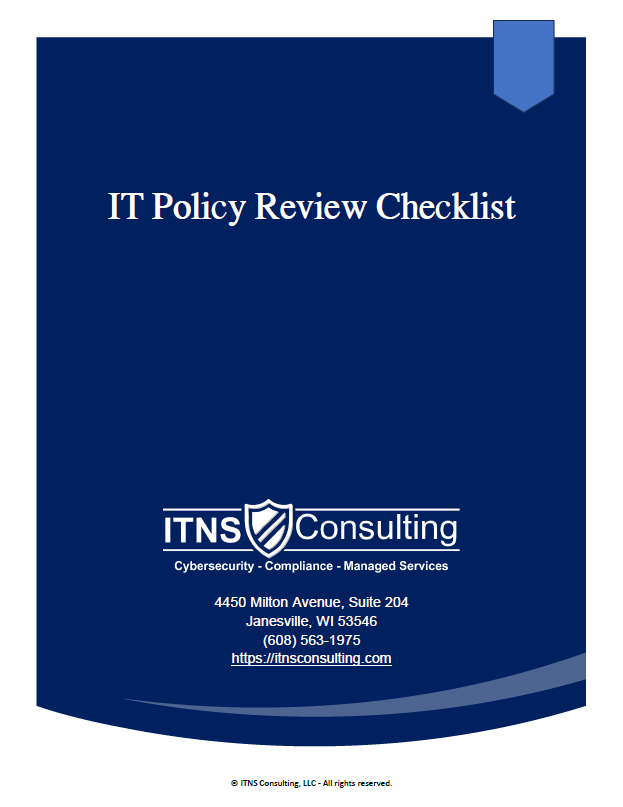
📝 IT Policy Review Checklist — Free Download
Ensure Your Policies Are Current, Aligned, and Fully Implemented
This checklist provides a clear framework for reviewing your IT policies, verifying their accuracy and real-world relevance, and ensuring proper coverage across security, data, operations, and vendor management.
It also helps define ownership, track evidence and audit readiness, establish a consistent review schedule, and complete a final readiness check.
Perfect for:
✔️ Small business owners and leadership teams without formal IT policies
✔️ Organizations preparing for audits, cyber insurance renewals, or client due diligence
✔️ Companies with outdated policies that may no longer reflect actual operations
✔️ Compliance, risk, operations, or IT leaders responsible for policy oversight
✔️ Businesses that need clearer policy ownership, review schedules, and supporting evidence.