A cyber incident is a type of security event that can harm a business like yours. Ranging from data breaches and system failures to malware attacks and phishing scams, these incidents can hinder productivity, revenue growth and customer satisfaction.
In most cases, a cyber incident will result in data loss or downtime. This can include loss of confidential information, customer data or business records. In some cases, a cyber incident can also cause business interruption or financial loss.
We can all agree that no one wants their business to be hacked. A single cyber attack can rob you of your time, money and peace of mind. In addition to getting systems operational and data restored, you have to let all affected parties know that their data may have been compromised. This can be a difficult situation to navigate for anyone, but it doesn’t have to be the end of the world.
In this blog, we’ll provide you with proactive and reactive approaches to tackle an attack, cope with the aftermath of a hack and prevent future incidents.
Proactive Steps To Implement
By taking these proactive steps, you can help protect your business from the devastating consequences of a cyber attack:
Routinely Update Your Passwords
It’s critical to update your passwords regularly to help keep your account safe. By updating your passwords every six months, you can help protect your account from being hacked.
Here are a few tips on how to create a strong password:
- Use a mix of upper and lowercase letters, numbers and symbols
- Make it at least 16 characters or more
- Avoid using easily guessable words like your name, your kid’s or pet’s names, birth date, favorite sports team, well known quotes, etc.
- Always use a different password for each account and never reuse passwords – EVER!
- Use a password manager like LastPass that can help you keep track of your passwords and generate new ones as needed.
Use a Virtual Private Network (VPN)
A virtual private network encrypts your company’s data and gives you complete control over who has access to it. This can aid in the prevention of data breaches and the protection of your company’s information. However, make sure to select a reputable provider offering robust security features.
Conduct Regular Security Awareness Training
As a responsible business executive, you must ensure that your company’s security awareness training program is comprehensive, engaging and adaptable to new threats. In today’s digital age, this is critical to protect your business.
Run Regular Phishing Tests
Phishing is a type of cyber attack that employs deceitful techniques to try and obtain sensitive information from users or cause them to download malicious software. Phishing attacks can be highly sophisticated and challenging to detect, which is why it is essential to periodically test your employees to assess their vulnerability to this type of attack.
Reset Access Controls Regularly
It is crucial to regularly reset access controls to prevent unauthorized access to protected resources. This helps to ensure that only authorized individuals have access to sensitive information. Resetting access controls can be done manually or with automated tools.
Use Multi-Factor Authentication (MFA)
Multi-factor authentication is a security measure that requires your employees to provide more than one form of identification when accessing data, reducing the likelihood of unauthorized data access. This can include something they know (like a password), something they have (like a security token) or something they are (like a fingerprint).
Before we move on, take note of the cybersecurity training topics recommended by the Small Business Administration (SBA) for all small businesses:
- Spotting a phishing email
- Using good browsing practices
- Avoiding suspicious downloads
- Creating strong passwords
- Protecting sensitive customer and vendor information
- Maintaining good cyber hygiene
Reactive Steps To Remember
The National Institute of Standards and Technology’s (NIST) reactive incident response framework covers the following five phases:
Identify
To develop an effective incident response plan, security risks must be identified. This includes, among other things, threats to your technology systems, data and operations. Understanding these risks allows you to respond to incidents more effectively and reduce the impact of security breaches.
Protect
To protect your company, you need to develop and implement appropriate safeguards. Security measures to guard against threats and steps to ensure the continuity of essential services in the event of an incident are examples of safeguards.
Detect
Detecting anomalies, such as unusual network activity or unauthorized access to sensitive data, are needed to limit the damage and get your systems back up and running faster following an incident.
Respond
A plan to respond to detected cyber incidents is critical. This strategy should include breach containment, investigation and resolution strategies.
Recover
To minimize disruption, you must have a plan to resume normal business operations as soon as possible after an incident.
Implementing the above proactive and reactive steps requires time, effort and skill sets that are possibly beyond what you can commit to at the moment.
Cyber Resilience Requires Both Prevention and Preparation
Every organization should work to prevent cyber incidents, but prevention alone is not enough. Even businesses with strong cybersecurity controls can experience unexpected events that require a coordinated response. The organizations that recover most effectively are the ones that balance proactive security measures with practical incident response planning.
A proactive approach helps reduce risk through security controls, employee awareness training, vulnerability management, and ongoing monitoring. A reactive approach ensures that when an incident occurs, your team knows how to respond, communicate, recover, and minimize disruption.
Cyber resilience is built when prevention and response work together. The goal is not simply avoiding incidents. It is ensuring your organization can continue operating, protect critical information, and recover quickly when challenges arise.
The best time to prepare for a cyber incident is before one occurs.
Is Your Organization Ready to Respond to a Cyber Incident?
Many businesses invest in cybersecurity tools but never develop a documented plan for what happens when those defenses are tested. If you’re unsure whether your organization is prepared to respond effectively to a cyber incident, schedule a free consultation with ITNS Consulting.
We’ll help you evaluate your current readiness, identify potential gaps, and develop a practical strategy that balances prevention, response, recovery, and long-term resilience.
Would Your Team Know What to Do During a Cyber Incident?
A well-documented response plan can significantly reduce confusion, downtime, and business disruption during a cybersecurity event.
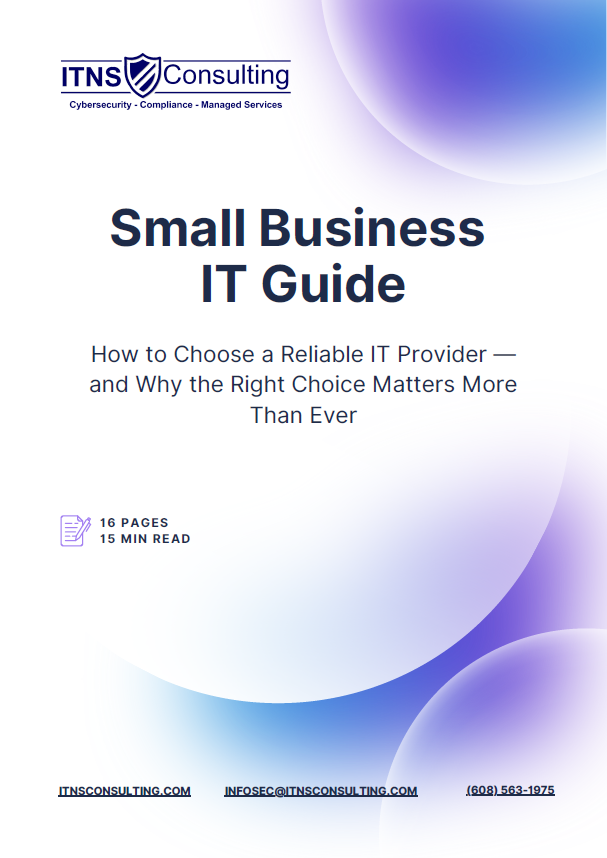
Download our Incident Response Plan Template to establish clear roles, responsibilities, communication procedures, and recovery actions that help your organization respond effectively when an incident occurs.
🚨 Incident Response Quick Start Plan — Free Download
React Fast. Minimize Damage. Restore Operations With Confidence.
This plan breaks incident response into clear, actionable steps that help you contain threats, protect critical systems and data, preserve evidence, and communicate confidently.
It also guides secure system recovery and documentation of findings to reduce risk and prevent similar incidents from happening again.
Perfect for:
✔️ Small and mid-size businesses without a formal IR plan
✔️ Teams evaluating their current provider’s response capabilities
✔️ Organizations preparing for cyber‑insurance renewal
✔️ Leaders wanting basic readiness before adopting full IR playbooks
✔️ Anyone who wants to reduce panic and confusion during an incident