

Nothing is more crucial to a business than stability. Yes, profit matters, but companies can achieve consistent profits easily when markets are stable. The world, of course, doesn’t always work this way. Markets are highly unpredictable and things change in the blink of an eye. If your business’s viability is dependent on the marketplace, which is almost always the case, you must be prepared to face the challenges of trying to maintain a smooth path through a changing landscape. That path starts with your business’ people, processes and technology.
Businesses that survive and thrive under any circumstances share one trait: they are agile. When faced with a challenge, an agile business, like a skilled soccer player, knows when to decelerate, accelerate and turn. Agility can help organizations adapt to changes in the market and changes within the company.
Begin with people, processes and technology
People
Beyond systems, stable and flexible personality types must be prioritized in your hiring practices. This means hiring those who are comfortable with change and can leverage change to better themselves and eventually the company. People are just as critical as processes in your organization’s ability to be agile.
For instance, dividing positions by novelty versus repetition is a good idea (i.e., tasks with little to no context and which require a lot of research vs. well-documented duties with a playbook).
Companies that use both work styles and appropriately cross-train their employees to take on both are usually better equipped to deal with changing market situations.
Processes
It’s a good idea to plan ahead, but it’s also advisable to leave room for unexpected changes. Find the right combination for you. A process can be 70% planned and 30% improvised but knowing your typical mix ahead of time makes it easier to react quickly when the situation demands it.
To take your processes through the path of agility, answer the following questions:
- How does your company assess agility? Is this working well, or do you need to broaden the definition to include departments other than IT?
- Categorize the work you’ve done in the last 12 months (what percentage of it was planned versus ad hoc?)
- Are the right people in the appropriate positions?
- What slowed previous attempts to pivot quickly?
Technology
When handled properly, technology can substantially support your people and processes. However, you must make sure that the technology you use helps your business adapt to changes quickly. Otherwise, it could be the biggest hindrance in your journey towards agility.
Agility Requires More Than Technology Alone
Organizations that adapt quickly to change often outperform those that rely on outdated processes, disconnected systems, or reactive decision-making. True agility is achieved when people, processes, and technology work together to support innovation, efficiency, and continuous improvement.
Technology plays an important role, but agility is not created by software alone. It requires clear processes, empowered employees, effective communication, and a willingness to continually evaluate and improve how work gets done. Organizations that invest in these areas are often better positioned to respond to changing customer expectations, market conditions, and business challenges.
The most agile organizations do not simply react to change. They prepare for it, embrace it, and use it as an opportunity to grow stronger.
Building agility today helps create a more resilient, efficient, and competitive organization tomorrow.
Is Your Organization Ready to Adapt and Grow?
Many businesses recognize the need for greater agility but struggle to identify where technology, processes, and operational improvements should be prioritized. If you’d like help evaluating your current environment and building a practical strategy for improving efficiency and adaptability, schedule a free consultation with ITNS Consulting.
We’ll help identify opportunities for improvement, prioritize technology initiatives, and develop a roadmap that supports business agility, operational resilience, and long-term success.
Build a Technology Plan That Supports Organizational Agility
The most agile organizations align technology investments with business goals, operational improvements, and future growth plans.
Download our Technology Roadmap Planner to evaluate your current technology environment, identify future priorities, and create a practical roadmap that supports agility, operational efficiency, innovation, and long-term business success.
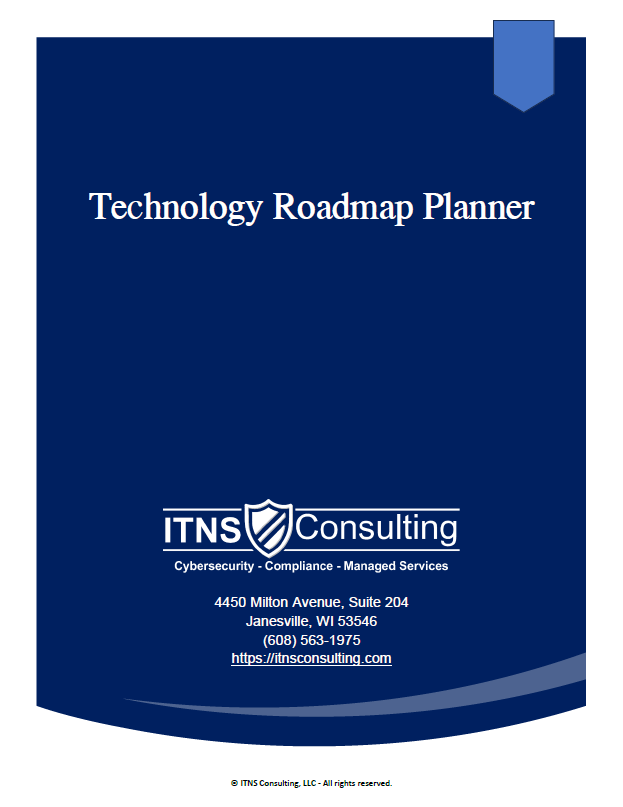
🧭 Technology Roadmap Planner — Free Download
Create a Clear, Strategic, and Measurable IT Improvement Plan
This structured planning tool helps you map IT, cybersecurity, and compliance priorities, identify outdated or high-risk systems, and document operational challenges and improvement opportunities.
It also helps you build a clear 12- or 24-month roadmap that aligns technology investments with budget cycles and communicates priorities clearly to leadership, staff, and vendors.
Perfect for:
✔️ Small business owners and general managers
✔️ Office managers and operations leads
✔️ Teams evaluating IT providers or internal processes
✔️ Organizations preparing for growth, compliance, or cyber insurance
✔️ Any business wanting more predictable, strategic IT planning