Artificial intelligence (AI) can help organizations gain an edge in today’s highly competitive business landscape by increasing efficiency, productivity, and profitability. You can improve customer service, enhance marketing efforts, optimize inventory management, streamline sales processes, and more.
Implementing AI requires a strategic approach to ensure that it delivers the intended benefits while being practical, ethical, and aligned with the overall business plan of your organization. In this blog, we’ll explore the best practices you can implement to successfully integrate AI into your business.
Best Practices For Leveraging AI Successfully
1. Pick the best places to start
Identify critical business areas that AI can solve or add value to. Prioritizing key functions to automate and optimize will get you a quick win and prove the value of AI integration to stakeholders.
2. Ensure data quality and integrity
Your data must be clean, structured, and complete for your AI strategy to succeed. This will help your model deliver more accurate and valuable insights, improving the efficiency of your business processes and decision-making.
3. Be open to innovation and experimentation
AI technology is rapidly expanding, and your business can reap the rewards, by staying open to innovation and experimentation. By adopting new approaches and opportunities to innovate, your business can find new ways to leverage the full potential of AI technology.
4. Get help and support from the experts
Transitioning to a new technology on your own can be challenging. That’s why you should consider partnering with a trusted IT service provider like ITNS Consulting, to access the expertise and tools you need to ensure you implement best practices as per industry standards.
5. Think about the ethics
For the long-term success of your business, it’s crucial to use AI ethically and transparently, with clear accountability measures in place. Ensure that you use unbiased data and maintain transparency in the algorithm from the beginning. This will minimize risks and ethical challenges from popping up down the road.
AI Delivers the Greatest Value When Guided by Strategy
Artificial Intelligence has the potential to help businesses improve efficiency, automate repetitive tasks, enhance decision-making, and create better experiences for customers and employees alike. However, successful AI adoption requires more than simply implementing new tools.
Organizations that achieve the best results begin by identifying specific business challenges, evaluating opportunities for improvement, and aligning technology investments with operational goals. They establish clear expectations, measure outcomes, and ensure that employees understand how to use AI responsibly and effectively.
The most successful AI initiatives are not driven by technology alone. They are driven by business objectives, supported by thoughtful planning, and reinforced through ongoing evaluation and improvement.
When approached strategically, AI can become a powerful tool for increasing productivity, improving service delivery, and supporting long-term business growth.
Is Your Business Ready to Leverage AI Effectively?
Many organizations are excited about AI but are unsure where to begin or how to maximize value while minimizing risk. If you’d like help identifying practical AI opportunities and building a strategy that aligns with your business goals, schedule a free consultation with ITNS Consulting. We’ll help you evaluate potential use cases, identify priorities, and develop a roadmap for successful AI adoption.
Build a Technology Strategy That Supports Innovation
Emerging technologies like AI can create significant opportunities, but successful adoption starts with a clear plan.
Download our Technology Roadmap Planner to evaluate your current technology environment, identify strategic priorities, and create a practical roadmap for future technology investments and innovation initiatives.
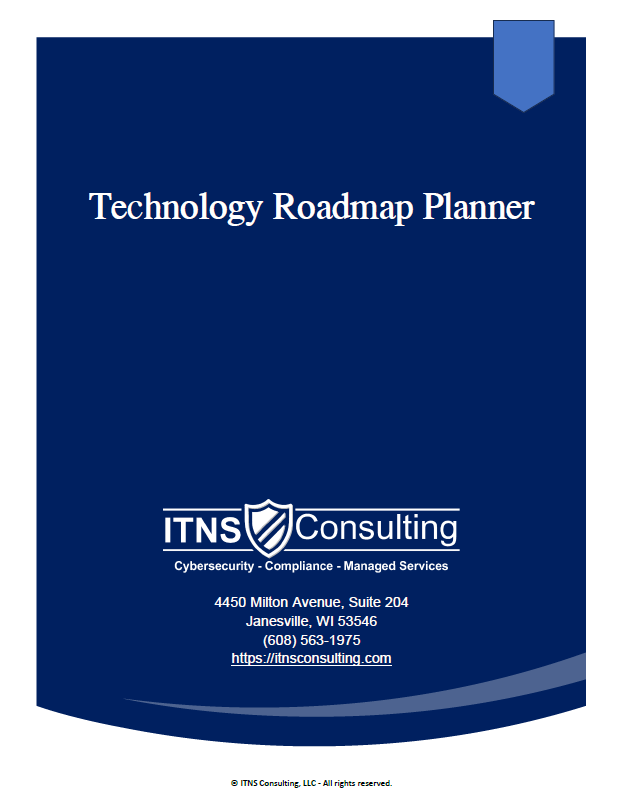
🧭 Technology Roadmap Planner — Free Download
Create a Clear, Strategic, and Measurable IT Improvement Plan
This structured planning tool helps you map IT, cybersecurity, and compliance priorities, identify outdated or high-risk systems, and document operational challenges and improvement opportunities.
It also helps you build a clear 12- or 24-month roadmap that aligns technology investments with budget cycles and communicates priorities clearly to leadership, staff, and vendors.
Perfect for:
✔️ Small business owners and general managers
✔️ Office managers and operations leads
✔️ Teams evaluating IT providers or internal processes
✔️ Organizations preparing for growth, compliance, or cyber insurance
✔️ Any business wanting more predictable, strategic IT planning