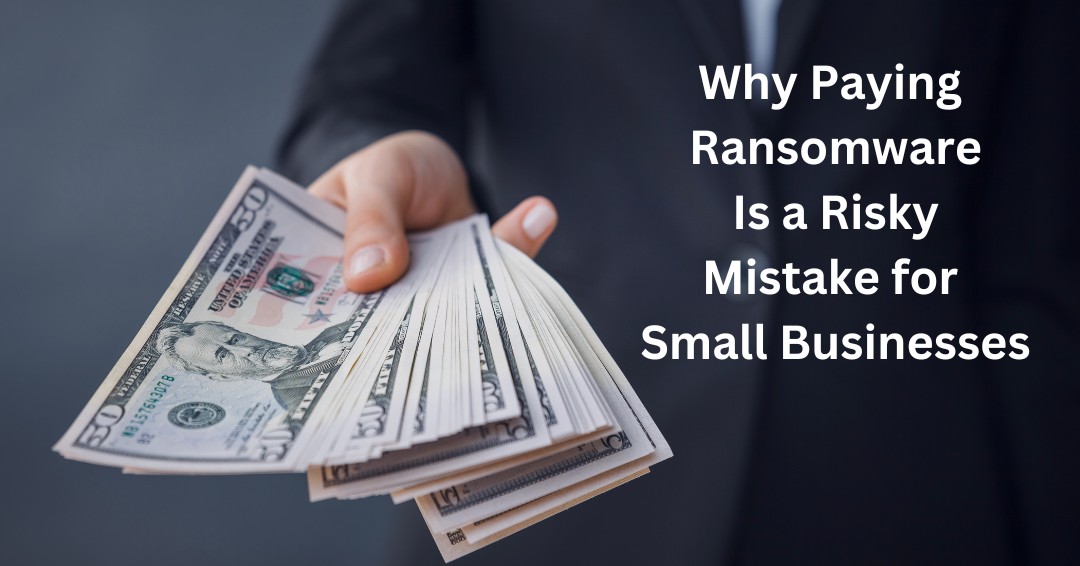


As a small business owner, you’re probably aware that cybersecurity is crucial for protecting your data. But do you know what steps to take if your business falls victim to a ransomware attack, including the risks and implications of paying ransomware?
Ransomware is one of the biggest threats to your company’s digital security. When your business data gets encrypted by malicious software, it can grind operations to a halt. The question that many business owners struggle with is whether they should pay the ransom to get their data back. While the pressure to act quickly can be overwhelming, paying the ransom is often a costly mistake. Let’s explore why.
How Ransomware Targets Small Businesses
Small businesses are often prime targets for ransomware attacks because hackers know many of them lack robust security measures. Ransomware typically starts when a hacker gains access to your systems through phishing emails, software vulnerabilities, or by exploiting weak passwords. Once inside, they locate sensitive data, such as customer information or business secrets, and encrypt it, making it unreadable without a decryption key.
For a small business owner, this can be a nightmare, especially if your data is critical to your daily operations. Without a reliable backup system in place, you might feel desperate to pay the ransom, which can run as high as $2 million per attack on average.
However, even with the pressure to pay, you should know that ransomware attacks don’t just stop at encrypting your files. Hackers often demand a second payment to prevent your data from being leaked or sold on the Dark Web, adding another layer of extortion to the attack.
Why Paying the Ransom Is a Bad Idea
It might seem like paying ransomware is the quickest way to resolve the issue and get your business back on track. But here’s the reality: paying the ransom doesn’t guarantee you’ll regain access to your data. In fact, statistics show that 92% of organizations that pay still fail to recover all their files. Worse, even if you do regain access, there’s no assurance the hacker won’t sell your data or release it publicly, leading to further damage to your business and reputation.
As a small business owner, you need to be prepared for this possibility. Not only are you risking your money, but you’re also inviting future attacks. By paying hackers, you’re essentially encouraging them to target you or other businesses again.
In recent years, more businesses have realized this, and studies now show that over 70% of ransomware victims choose not to pay the ransom. That’s a positive sign that businesses are learning that paying only leads to more problems down the line.
The Real Solution: Prevention and Preparedness
So, what can you do to protect your small business? The answer lies in proactive security measures and proper data backup systems.
Regularly backing up your data is your best defense. Reliable backups ensure that even if your data is encrypted by ransomware, you can restore it without paying the ransom. In addition, ensuring that your backup system is tested frequently will help you identify any vulnerabilities before disaster strikes.
Another key step is to implement strong cybersecurity practices across your business, such as using multi-factor authentication, keeping software up to date, and training your employees to recognize phishing attempts. By doing this, you reduce the chances of your business falling victim to an attack in the first place.
The Best Ransomware Response Starts Before an Attack
Ransomware attacks continue to grow in frequency and sophistication, placing businesses of every size at risk. While paying a ransom may seem like the fastest path to recovery, there is no guarantee that attackers will return your data, restore your systems, or leave your business alone after receiving payment.
The most effective defense is preparation. Organizations that maintain reliable backups, regularly test recovery procedures, train employees, strengthen security controls, and follow cybersecurity best practices are far less likely to find themselves in a position where paying a ransom feels like the only option.
Cybersecurity is not just about preventing attacks. It is about ensuring your business can continue operating even when threats emerge. The stronger your recovery capabilities, the less leverage cybercriminals have over your organization.
The goal is simple: build a business that can recover confidently without rewarding the criminals behind the attack.
Could Your Business Recover Without Paying a Ransom?
Many organizations believe they have adequate backups until a cyber incident tests them. If you’re unsure whether your backup strategy, disaster recovery plan, and cybersecurity safeguards would allow your business to recover from a ransomware attack, schedule a free consultation with ITNS Consulting. We’ll help you identify potential gaps and develop a practical strategy for improving resilience and recovery readiness.
Is Your Business Ready to Recover from a Ransomware Attack?
The ability to recover quickly often determines whether a ransomware incident becomes a temporary disruption or a major business crisis.
Download our Backup & Disaster Recovery Preparedness Checklist to evaluate your backup strategy, identify potential weaknesses, and strengthen your organization’s ability to recover from ransomware, data loss, and other unexpected disruptions.
💾 Backup & Disaster Recovery Preparedness Checklist — Free Download
Be Ready for the Inevitable: Outages, Mistakes, Cyberattacks & Hardware Failures
This checklist helps leaders verify the reliability of their backup & recovery posture by highlighting the items that matter most: integrity, separation, testing, documentation, and clear expectations.
Perfect for:
✔️ Small and midsize businesses
✔️ Organizations preparing for cyber‑insurance renewal
✔️ Teams evaluating current IT providers
✔️ Companies with compliance or uptime requirements
✔️ Businesses that cannot afford downtime or data loss