Ransomware attacks are becoming more sophisticated and frequent, targeting businesses of all sizes. Implementing a comprehensive ransomware prevention strategy is essential to safeguard your data, maintain business continuity, and avoid costly downtime. Here are the most effective strategies you can implement today:
1. Train Your Employees to Be Cyber-Aware
Human error remains the number one entry point for ransomware. Phishing emails, malicious attachments, and deceptive links are common tactics used by cybercriminals. Conduct regular cybersecurity awareness training to help employees:
- Identify and report phishing attempts
- Avoid clicking on suspicious links or downloading unknown files
- Use secure passwords and avoid password reuse
Interactive simulations and real-world examples can make training more effective and memorable.
2. Back Up Your Data—And Test It Often
A robust backup strategy is your safety net. Ensure you:
- Maintain both cloud-based and offline (air-gapped) backups
- Encrypt all backup data to prevent unauthorized access
- Schedule automated backups and test them regularly to verify data integrity
In the event of a ransomware attack, having clean, recent backups can mean the difference between a quick recovery and a devastating loss.
3. Use Advanced Cybersecurity Tools
Invest in a layered security approach that includes:
- Next-generation antivirus (NGAV) and anti-malware software
- Firewalls and intrusion detection/prevention systems (IDS/IPS)
- Endpoint Detection and Response (EDR) solutions
- Regular patching and updates for all software and operating systems
These tools help detect and block ransomware before it can execute.
4. Enable Multi-Factor Authentication (MFA)
MFA significantly reduces the risk of unauthorized access by requiring users to verify their identity through multiple methods. Implement MFA on:
- Email accounts
- Remote desktop connections
- Cloud services and admin portals
Even if a password is compromised, MFA adds a critical layer of defense.
5. Develop a Ransomware Response Plan
Preparation is key. A well-documented incident response plan should include:
- Immediate isolation of infected systems
- Communication protocols for internal teams and external stakeholders
- Legal and regulatory compliance steps
- Procedures for restoring systems from backups
Regularly test and update your plan to ensure it remains effective.
6. Don’t Pay the Ransom
Paying the ransom does not guarantee data recovery and may encourage further attacks. Instead, focus on:
- Prevention through strong security practices
- Recovery through reliable backups
- Reporting the incident to law enforcement and cybersecurity authorities
Organizations that resist paying ransoms help disrupt the ransomware economy.
The Future of Ransomware and What It Means for You
Ransomware is evolving rapidly. In the coming years, expect to see:
- AI-powered attacks that adapt in real time
- Increased targeting of supply chains and third-party vendors
- Greater use of automation and ransomware-as-a-service (RaaS) platforms
However, the cybersecurity industry is also advancing. AI-driven threat detection, behavior-based analytics, and zero-trust architectures are empowering businesses to stay ahead of attackers.
Ransomware Prevention Starts Before an Attack Occurs
Ransomware continues to be one of the most disruptive and costly cyber threats facing small businesses. The financial impact, operational downtime, reputational damage, and loss of customer trust can be significant, especially for organizations that are unprepared.
The good news is that many ransomware attacks can be prevented or significantly mitigated through practical cybersecurity measures. Strong authentication, employee awareness training, regular system updates, secure backups, and proactive monitoring remain some of the most effective ways to reduce risk.
Cybersecurity is not about eliminating every threat. It is about creating layers of protection that make your business a more difficult target and improve your ability to recover if an incident occurs.
The organizations that invest in prevention today are often the ones that avoid becoming tomorrow’s ransomware victims.
Could Your Business Be Vulnerable to Ransomware?
Many small businesses assume they are protected until an attack exposes gaps in their defenses. If you’re unsure whether your cybersecurity safeguards, backup strategy, and employee training efforts are sufficient, schedule a free consultation with ITNS Consulting. We’ll help you identify potential weaknesses and develop a practical strategy to reduce ransomware risk and strengthen your security posture.
Strengthen Your Cybersecurity Foundation
Ransomware attacks often succeed because of overlooked security weaknesses and preventable mistakes. Download our Cybersecurity Baseline Checklist to evaluate essential security controls, identify potential gaps, and take practical steps to better protect your business from today’s evolving cyber threats.
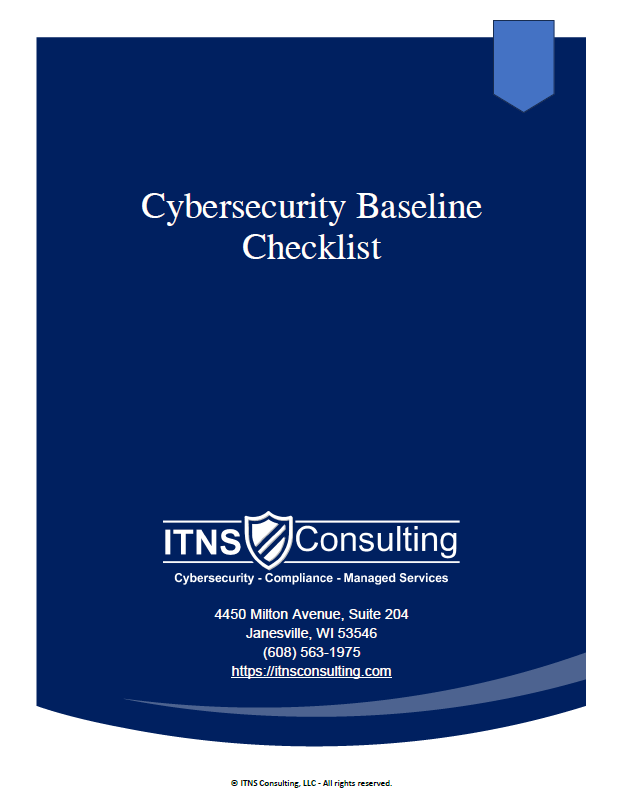
🛡️ Cybersecurity Baseline Checklist — Free Download
Understand Your Current Security Posture. Identify Gaps. Strengthen Your Defenses.
This straightforward, business-friendly checklist helps you evaluate your current security posture in minutes and identify weak points before attackers can exploit them.
It also helps you prioritize the most impactful fixes while strengthening compliance, cyber insurance readiness, and operational resilience.
Perfect for:
✔️ Small businesses getting started with cybersecurity
✔️ Leaders evaluating internal or outsourced IT performance
✔️ Teams preparing for growth, compliance, or insurance renewal
✔️ Organizations wanting predictable, repeatable security practices