

As the world increasingly moves online, so do the risks to our businesses. Cyber insurance is one way to help your business recover following a cyberattack. It covers financial losses caused by events such as data breaches, cyber theft, ransomware and more. Cyber insurance myths are also on the rise either due to resistance to change or a misunderstanding of what it is for.
Cyber insurance can be beneficial in many ways since it typically covers the cost of:
- Recovering data
- Legal proceedings
- Notifying stakeholders about the incident
- Restoring the personal identities of those affected
Due to the complicated nature of cyber insurance, there are a lot of myths out there that can be harmful to your business if you fall for them. Let’s debunk them together.
Cyber Insurance Myths Debunked
Busting the top cyber insurance myths like the ones below is necessary so that you can make informed decisions for your business:
Myth #1: All I need to protect my business from cyberthreats is a cyber insurance plan
This could not be further from the truth. Your insurance provider will only cover your business if you meet the requirements outlined in your contract. Most reputable insurers will require proof that you have been following the proactive measures outlined in your policy. If you can’t prove your compliance, your claims are unlikely to be paid.
One of the most common insurance requirements is that you have top-tier cybersecurity protection. Despite the availability of a variety of cybersecurity solutions in the market, keep in mind that not all of them are the same. Finding a solution that offers the best protection for your needs is crucial.
Myth #2: I don’t need cyber insurance since I have cybersecurity solutions
Even though cybersecurity solutions can boost your defenses, they don’t make you immune to cyber incidents. Yes, cybersecurity solutions can reduce the risk of a cyberattack by identifying and protecting vulnerable points in your system. However, no solution can provide complete protection against all threats because staying on top of emerging risks can be challenging.
Additionally, human error can always result in vulnerabilities in a system, regardless of how secure it is. That’s why it’s a good idea to have a cyber insurance policy in place to fall back on in case of an incident.
Myth #3: Cyber insurance is easy to get
As technology advances, so do the occurrences of cyber incidents. With small and medium-sized businesses being the most susceptible targets of cybercriminals due to a lack of enterprise-level protection, the likelihood of an attack is high. Consequently, insurers are reluctant to provide coverage since the risks are significant. While policies are still available, they are becoming more expensive and difficult to obtain.
Myth #4: If I have a cyber insurance policy, my claims will be covered in case there’s an incident
If you can’t prove that you’ve complied with your cyber insurance policy’s prerequisites, your claim is likely to be rejected. This is why you might want to consider partnering with an IT service provider. An expert IT service provider can help you remain compliant with your cyber insurance policy as well as provide evidence of such compliance.
Cyber Insurance Works Best When Paired with Strong Cybersecurity
Cyber insurance can be an important component of a business risk management strategy, but it is not a replacement for cybersecurity. Many of the misconceptions surrounding cyber insurance stem from the assumption that a policy alone guarantees protection. In reality, insurers increasingly expect organizations to implement and maintain specific security controls, risk management practices, and documented procedures.
Businesses that understand these requirements are often in a stronger position to secure coverage, satisfy underwriting expectations, and avoid unpleasant surprises during the claims process. Strong authentication, employee awareness training, backup strategies, incident response planning, and ongoing risk management all contribute to a more resilient and insurable organization.
The goal is not simply to purchase cyber insurance. It is to ensure your organization has the safeguards necessary to reduce risk and support policy compliance.
The best time to identify gaps is before a security incident occurs, not after a claim is submitted.
Would Your Cyber Insurance Policy Respond When You Need It?
Many businesses assume they are adequately protected until a claim review reveals unmet requirements, security gaps, or policy exclusions. If you’re unsure whether your current cybersecurity controls align with your cyber insurance obligations, schedule a free consultation with ITNS Consulting. We’ll help you evaluate your security posture, identify potential weaknesses, and improve your readiness for both underwriting reviews and future claims.
Are You Ready for Your Next Cyber Insurance Review?
Cyber insurers increasingly require businesses to demonstrate strong cybersecurity controls, documented procedures, and ongoing risk management practices before issuing or renewing coverage.
Download our Cyber Insurance Application Readiness Checklist to evaluate your current security posture, identify potential gaps, and better prepare for cyber insurance applications, renewals, and underwriting reviews.
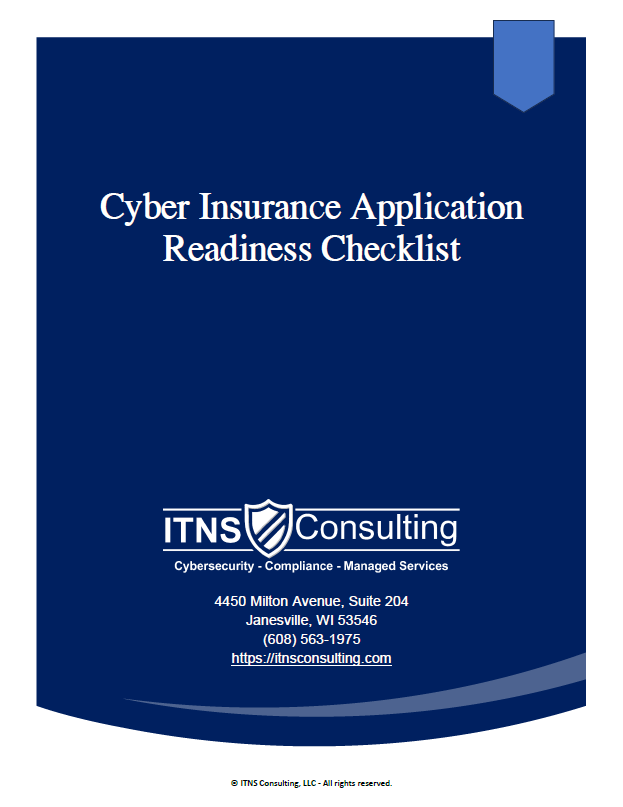
🛡️ Cyber Insurance Application Readiness Checklist — Free Download
Prepare with Confidence. Avoid Surprises. Strengthen Your Application.
This checklist breaks down the critical factors cyber insurers evaluate, helping you identify missing controls, gather the required evidence, and avoid application misstatements that could lead to denied claims.
It also strengthens your cybersecurity and governance posture, improving your chances of approval and more favorable premium terms.
Perfect for:
✔️ Small and mid-size businesses
✔️ Organizations renewing cyber policies
✔️ Teams preparing for their first cyber insurance application
✔️ Businesses evaluating internal or outsourced IT performance
✔️Companies wanting defensible, well‑documented security controls