Cyberattacks have grown in sophistication and frequency. A simple lapse in your network security could lead to a chain of events that could prove catastrophic for your business. You can avoid this by implementing a robust cybersecurity framework such as zero trust.
Zero trust asserts that no user or application should be trusted automatically. It encourages organizations to verify every access while treating every user or application as a potential threat. Zero trust is a great starting point for businesses that want to build formidable cybersecurity. It can not only adapt to the complexity of the modern work environment, including a hybrid workplace, but also protect people, devices, applications, and data irrespective of where they are located.
However, zero trust should not be mistaken for a solution or a platform, regardless of how security vendors market it to you. You can’t just buy it from a security vendor and implement it with a click of a button. Zero trust is a strategy — a framework that needs to be applied systematically.
Implementing Zero Trust: Three Core Principles To Remember
As you begin your journey to implement a zero-trust framework to bolster your IT security, there are three core principles that you must remember:
1. Continually verify
You should strive to implement a “never trust, always verify” approach to security by continuously confirming the identity and access privileges of users, devices, and applications. Consider implementing strong identity and access (IAM) controls. It will help you define roles and access privileges — ensuring only the right users can access the right information.
2. Limit access
Misuse of privileged access is one of the most common reasons for cyberattacks. Limiting access ensures that users are granted minimal access without affecting their day-to-day activities. Here are some common security practices that organizations have adopted to limit access:
-
- Just-in-time access (JIT) – Users, devices or applications are granted access only for a predetermined period. This helps limit the time one has access to critical systems.
- Principle of least privilege (PoLP) – Users, devices or applications are granted the least access or permissions needed to perform their job role.
- Segmented application access (SAA) – Users can only access permitted applications, preventing any malicious users from gaining access to the network.
3. Assume breach and minimize impact
Instead of waiting for a breach, you can take a proactive step toward your cybersecurity by assuming risk. That means treating applications, services, identities, and networks — both internal and external — as already compromised. This will improve your response time to a breach, minimize the damage, improve your overall security, and most importantly, protect your business.
Zero Trust Starts with Strong Security Fundamentals
Zero Trust is not a single product or technology. It is a security strategy built on the principle that trust should be continuously verified rather than automatically assumed.
For small businesses, adopting a Zero Trust mindset can significantly reduce risk by limiting unnecessary access, strengthening authentication, improving visibility, and helping ensure that users, devices, and systems are validated before gaining access to sensitive resources.
The good news is that organizations do not need to implement a complex enterprise-grade program overnight. Many of the building blocks of Zero Trust, including multi-factor authentication, least-privilege access, device security, and ongoing monitoring, are practical steps that businesses can begin implementing today.
The most effective security programs are built over time. By strengthening the fundamentals now, your organization can create a more resilient foundation for future growth and protection.
Is Your Business Ready for a Zero Trust Approach?
Many organizations have heard of Zero Trust but are unsure how to apply its principles in a practical and cost-effective way. If you’d like to better understand how Zero Trust can strengthen your security posture, schedule a free consultation with ITNS Consulting. We’ll help you evaluate your current environment, identify opportunities for improvement, and develop a practical roadmap for reducing risk and improving security.
Build a Stronger Cybersecurity Foundation
Zero Trust security relies on strong cybersecurity fundamentals. Download our Cybersecurity Baseline Checklist to evaluate essential security controls, identify potential gaps, and take practical steps to strengthen your organization’s security posture.
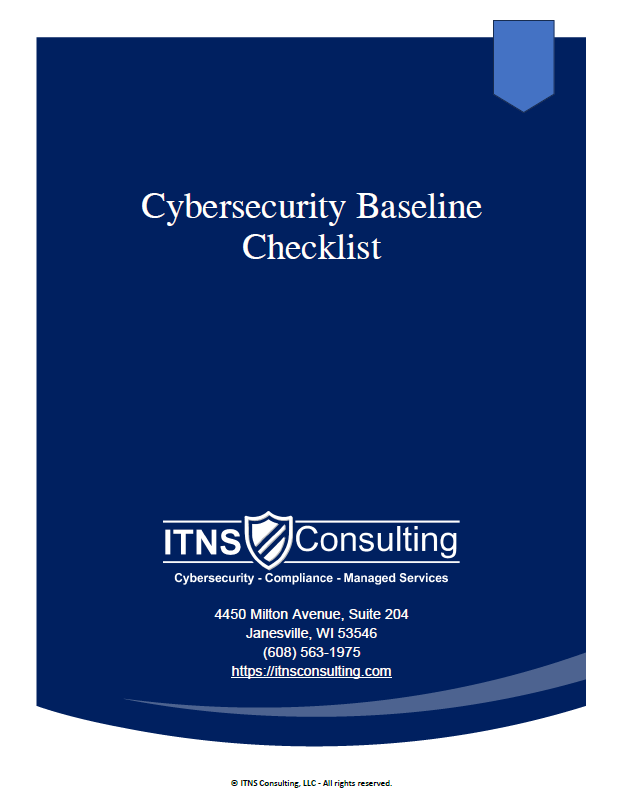
🛡️ Cybersecurity Baseline Checklist — Free Download
Understand Your Current Security Posture. Identify Gaps. Strengthen Your Defenses.
This straightforward, business-friendly checklist helps you evaluate your current security posture in minutes and identify weak points before attackers can exploit them.
It also helps you prioritize the most impactful fixes while strengthening compliance, cyber insurance readiness, and operational resilience.
Perfect for:
✔️ Small businesses getting started with cybersecurity
✔️ Leaders evaluating internal or outsourced IT performance
✔️ Teams preparing for growth, compliance, or insurance renewal
✔️ Organizations wanting predictable, repeatable security practices